The Short Version
A DFS optimizer helps build lineups from projections, salaries, roster rules, and user constraints. It can save time and reveal combinations a user might miss. It cannot guarantee a profitable lineup. It cannot know every late-news outcome. It cannot replace contest selection, ownership strategy, correlation rules, or bankroll discipline.
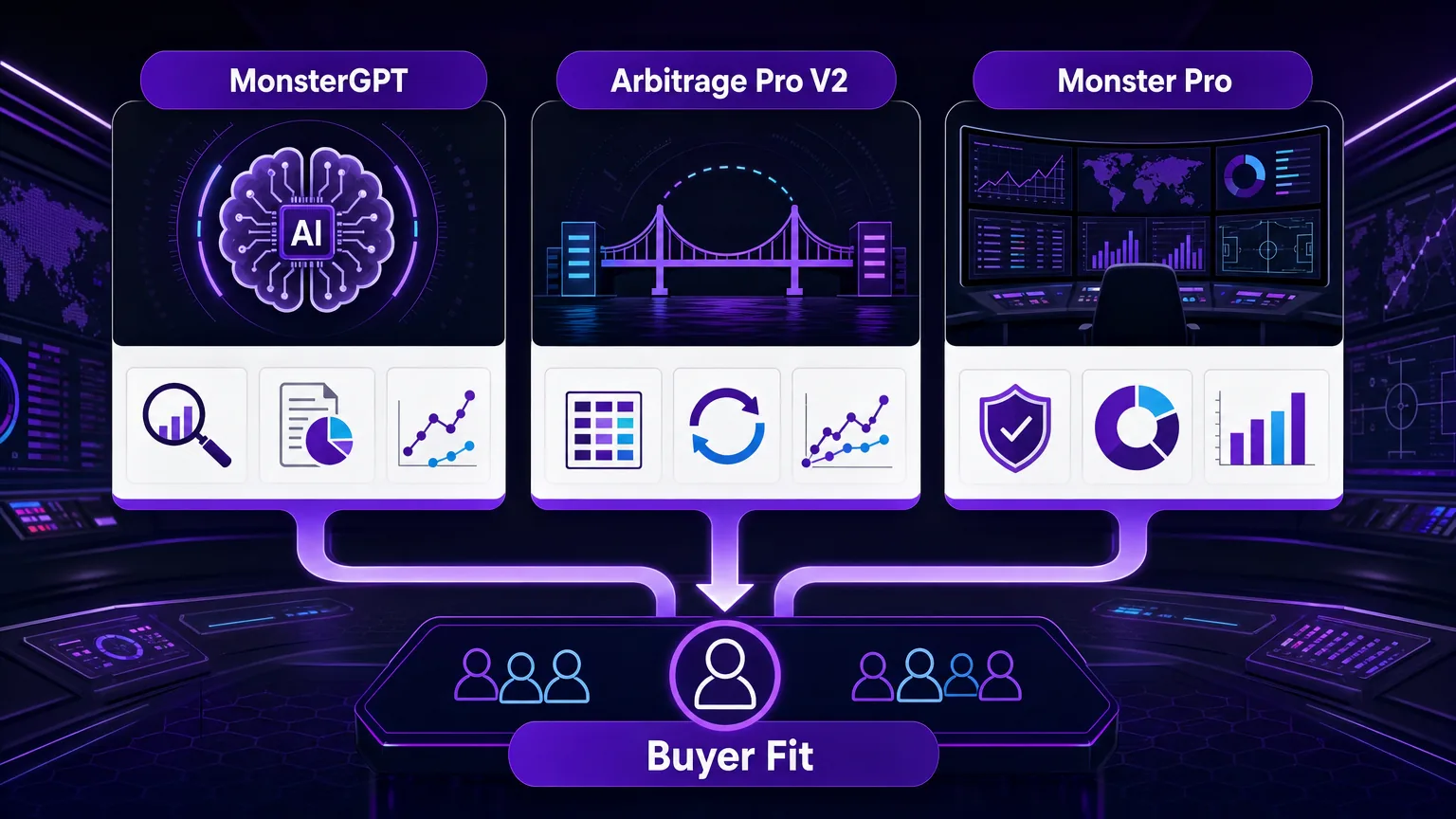
Monster Pro is the relevant Monster Bet product because the extracted Whop listing included a DFS Optimizer as part of the complete stack. MonsterGPT and Full Lab Access can support player research, but the optimizer itself belongs to Monster Pro. If daily fantasy is part of your weekly workflow, open Monster Pro on Whop.
This guide keeps DFS separate from sports betting picks. DFS is a different game. You are not only asking whether a player performs well. You are asking whether a lineup performs well under salary constraints, roster rules, contest type, ownership dynamics, correlation, and late swap decisions.
What A DFS Optimizer Does
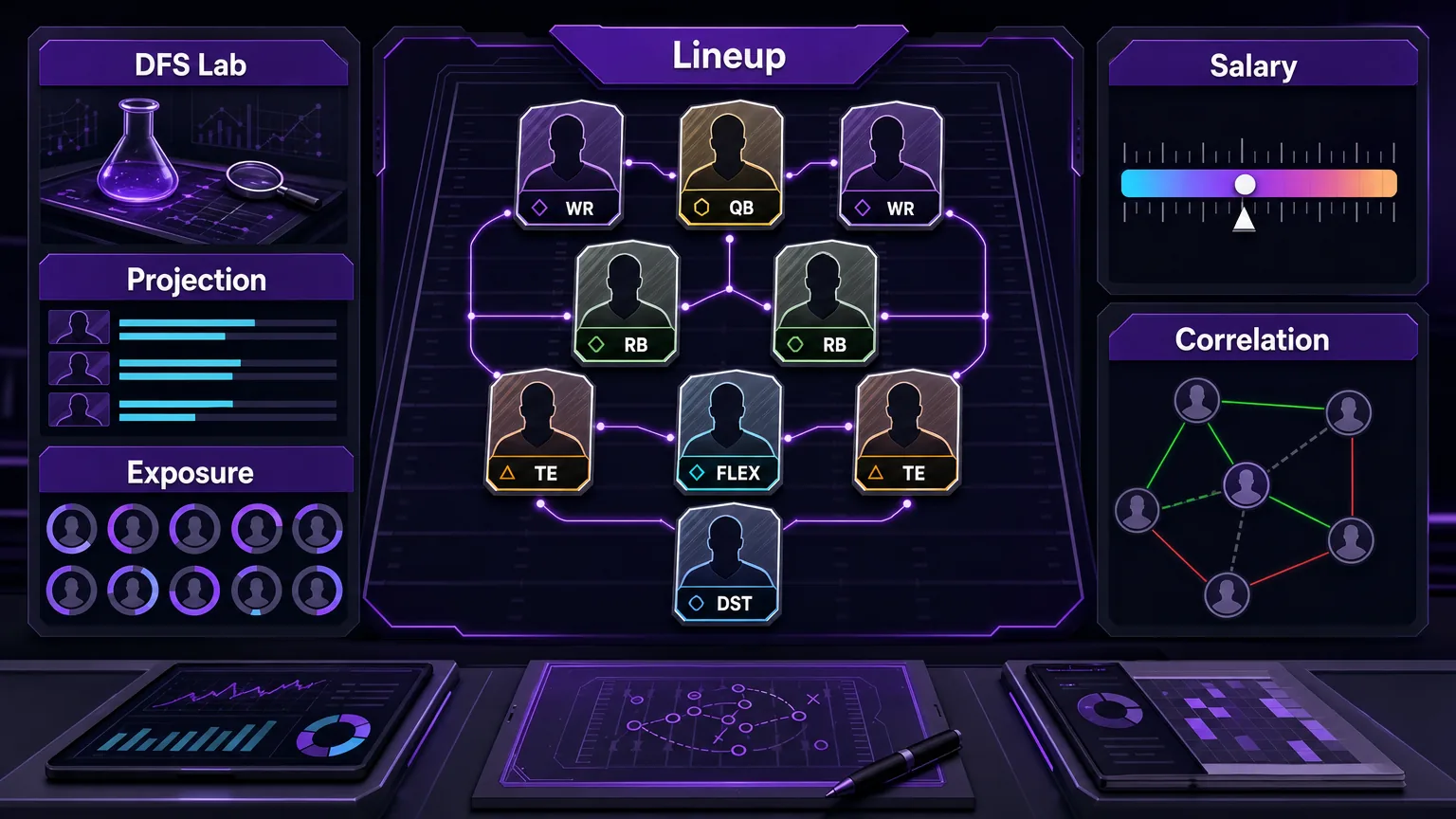
A DFS optimizer takes inputs and builds lineups under constraints. Common inputs include projections, player salaries, eligible positions, team, opponent, game environment, injury status, value rating, ceiling, floor, ownership projection, and exposure settings.
The optimizer’s basic job is mechanical: find valid combinations. The user’s job is strategic: decide which inputs and constraints make sense.
| Optimizer element | What it does | User responsibility |
|---|---|---|
| Projection | Estimates expected fantasy output | Decide whether projection is trustworthy |
| Salary | Forces budget tradeoffs | Decide where to pay up and where to save |
| Position rules | Keeps lineups legal | Understand roster construction |
| Exposure cap | Limits how often a player appears | Manage portfolio risk |
| Lock/exclude | Forces or removes players | Avoid emotional locks and lazy exclusions |
| Stack rules | Creates correlated groups | Match contest strategy |
The optimizer is powerful because it is fast. It is risky because it can quickly multiply bad assumptions.
The One Lie About Optimizers
The lie: "The optimizer knows the best lineup."
The optimizer knows the best lineup according to its inputs and rules. If the inputs are weak, the output is weak. If the rules are wrong, the output can be structurally bad. If late news changes the slate, a lineup that looked strong can become fragile.
The fix: treat the optimizer as a lineup engine, not a DFS brain.
The user still owns projections, contest type, exposure, correlation, and late-news response.
The number: one contest type per build.
Do not build one generic lineup set and use it everywhere. Cash games, small-field tournaments, and large-field tournaments require different assumptions.
Where Monster Pro Fits
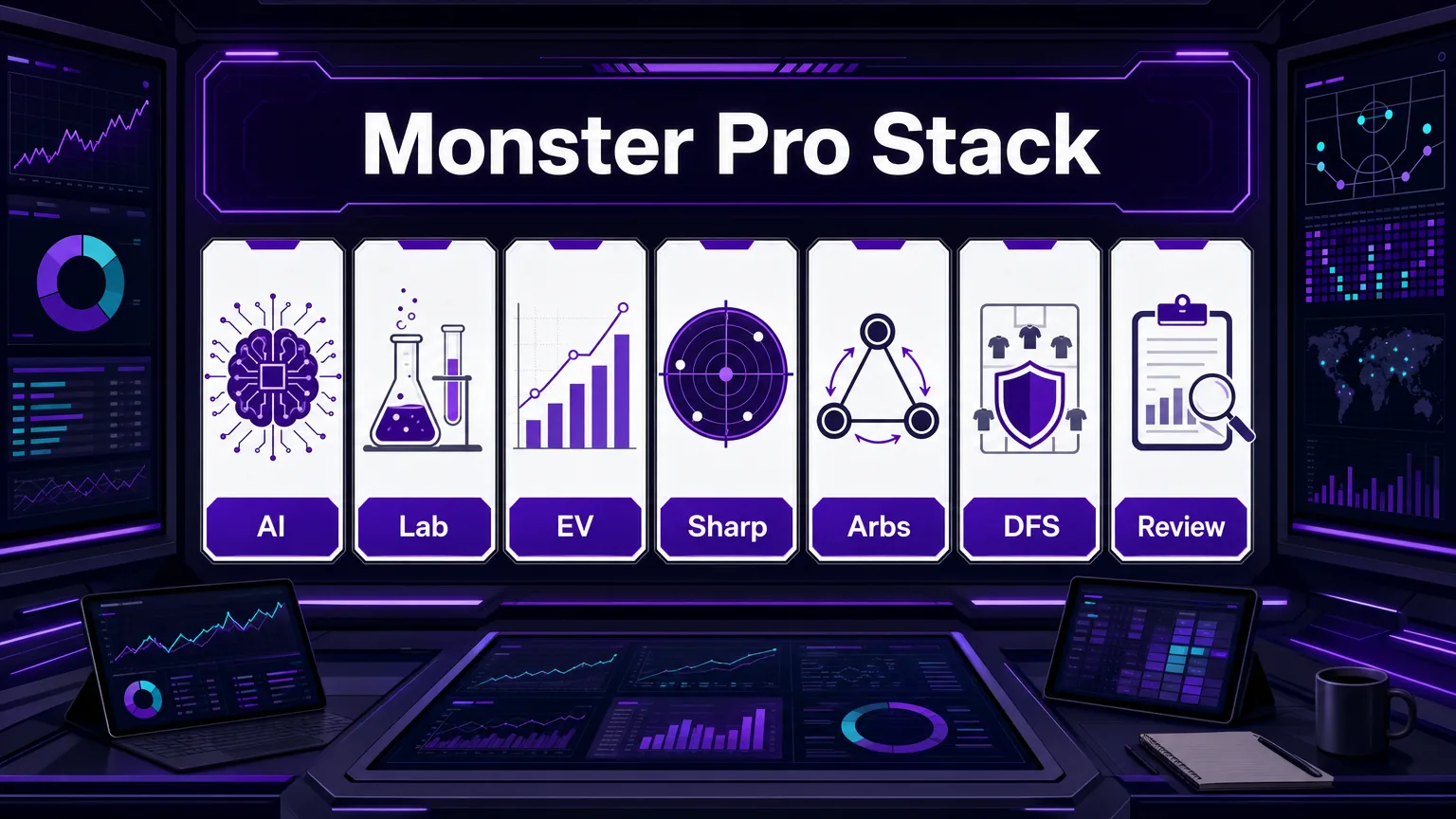
Monster Pro includes DFS Optimizer access alongside Full Lab Access, MonsterGPT, Positive EV Finder, Sharp Money Scanner, and Arbitrage and Middles. That makes sense for users who connect betting research and DFS research. Player projections, game logs, matchup data, and market context can all feed lineup decisions.
Monster Pro is not the right choice if you do not play DFS. The optimizer should not be counted as value unless it will be used. But for DraftKings or FanDuel players who already build lineups weekly, optimizer access can be one of the clearest reasons to choose the full stack.
CTA: Open Monster Pro on Whop.
The Inputs That Matter
Projections
Projections are the base layer. They estimate fantasy output. But projections are not equal. A median projection may be useful for cash games. Ceiling projection may matter more in large-field tournaments.
Salary
Salary creates opportunity cost. A cheap player with a strong role can unlock expensive stars. An expensive player needs enough ceiling or floor to justify the cost.
Role And Minutes
DFS output follows opportunity. Minutes, snaps, routes, usage, shot attempts, carries, targets, ice time, or batting order all matter depending on sport.
Game Environment
Pace, total, spread, weather, opponent, and correlation can influence lineup construction. A player can project well individually but make less sense in a lineup that lacks correlation.
Ownership
Ownership matters most in tournaments. A high-owned player can still be a good play, but the lineup needs a reason to beat similar builds. Low ownership can create leverage, but low-owned bad plays are still bad plays.
Late News
Late news can change everything. Optimizers are useful here because they can rebuild quickly, but the user needs a plan before news breaks.
Cash Games Versus Tournaments
Cash games usually reward stability. The user may prioritize floor, role security, and obvious value. Tournaments reward ceiling, leverage, correlation, and uniqueness.
| Contest type | Optimizer emphasis | Risk |
|---|---|---|
| Cash games | Floor, value, role stability | Being too cute |
| Small-field tournaments | Balanced ceiling and reasonable ownership | Over-stacking or under-leveraging |
| Large-field tournaments | Ceiling, correlation, leverage, uniqueness | Playing bad contrarian lineups |
| Single-entry | Strong core with controlled differentiation | Copying duplicated builds |
| Mass multi-entry | Exposure rules and portfolio design | Letting bad settings create many bad lineups |
Before using any DFS optimizer, choose contest type. The optimizer cannot know your strategic goal unless you encode it.
How To Use MonsterGPT With DFS
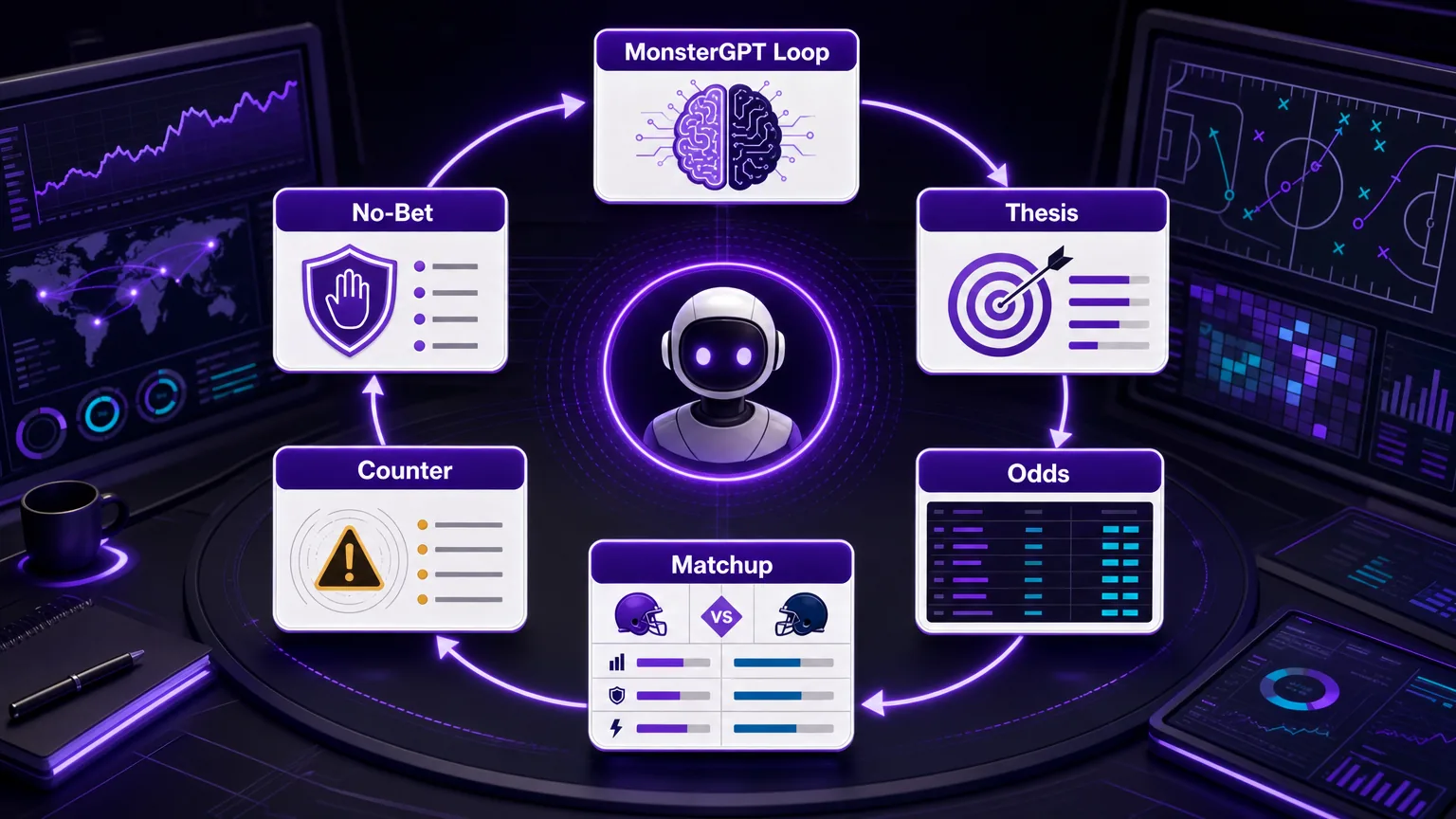
MonsterGPT can support DFS by summarizing roles, identifying assumptions, and turning player pools into checklist questions.
Good prompts:
- "Review this player pool for role risk, salary value, and late-news sensitivity."
- "List the strongest reasons to lock this player and the strongest reasons not to."
- "Compare these value plays by projection, role, matchup, and ownership risk."
- "Create cash-game and tournament rules from this slate research."
- "Identify which players are correlated and which lineups may be too fragile."
Bad prompts:
- "Give me the winning lineup."
- "Tell me the guaranteed DFS play."
- "Make me profitable tonight."
The assistant helps when it makes assumptions visible. It hurts when it encourages certainty.
A Practical Lineup Workflow
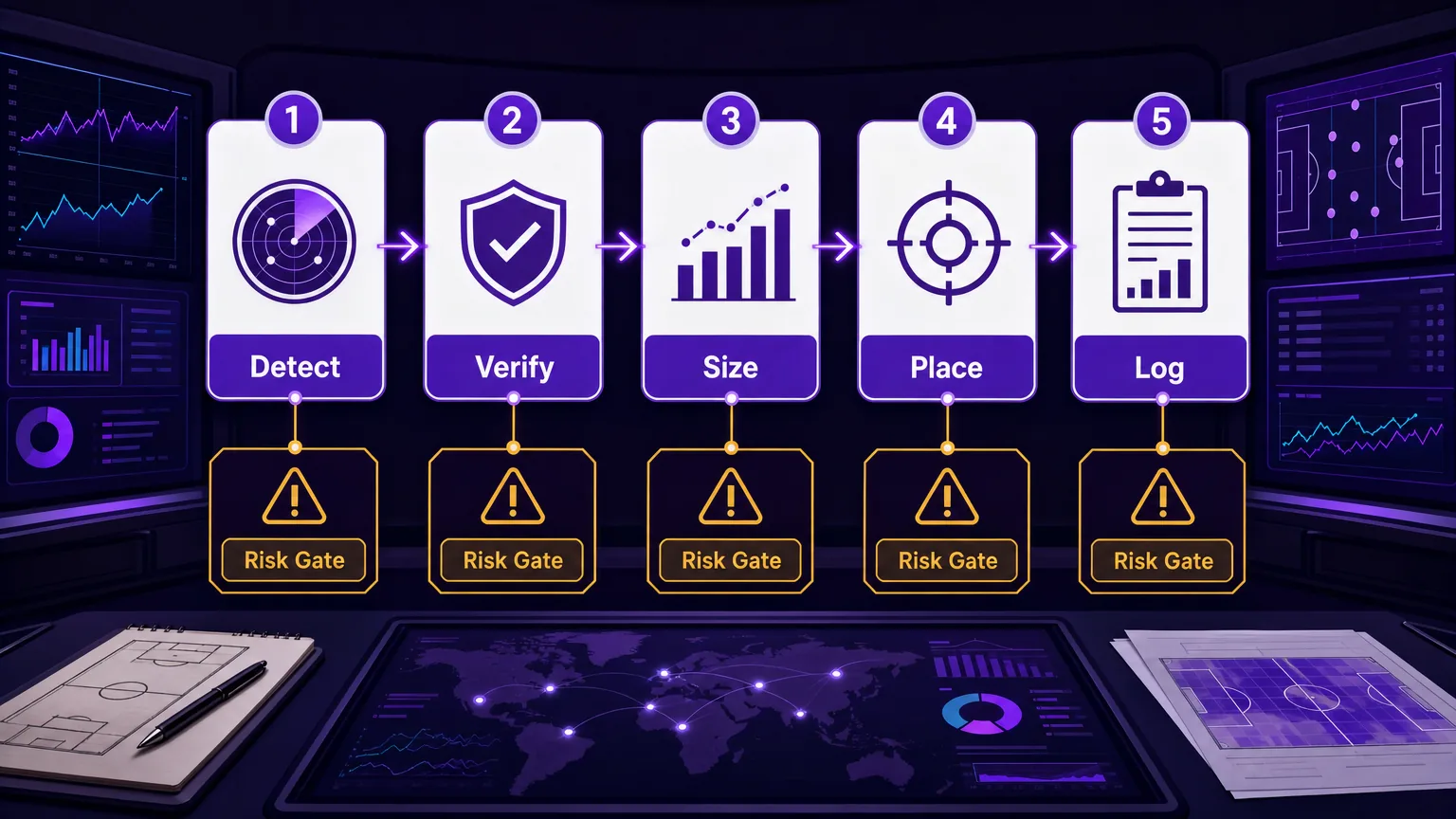
- Choose contest type before building.
- Review projections and remove obvious bad inputs.
- Check role, injury, lineup, and minutes/snap assumptions.
- Build a player pool with locks, leans, and excludes.
- Set exposure caps based on risk tolerance.
- Add stack or correlation rules if relevant.
- Generate lineups.
- Review the lineups manually.
- Ask MonsterGPT to identify fragile assumptions.
- Rebuild after late news if needed.
- Log contest type, rules, and results.
A DFS optimizer becomes more valuable when the user controls the rules and reviews the output. Blindly uploading optimizer lineups is not a strategy.
Common DFS Optimizer Mistakes
Bad Projections In, Bad Lineups Out
An optimizer cannot rescue poor inputs. Review projections before generating.
Over-Locking Players
Locks create fragile lineups. Lock only when the reason is strong.
Ignoring Ownership
Tournament lineups need leverage. Ownership should not be everything, but it cannot be ignored.
No Late Swap Plan
Late news can create major edge or major risk. Decide how you will respond before lock.
Using One Build Everywhere
Different contests need different lineups. Do not use a cash build in a large-field tournament and expect it to behave like a tournament lineup.
Who Should Use This Workflow
This workflow fits users who already play DFS and want more structure. It also fits sports bettors who use player projections and want to expand into DFS with discipline.
It does not fit users who do not play DFS, hate projections, or want a magic lineup button. If DFS is not part of your weekly behavior, do not count the optimizer as value when choosing Monster Pro.
Internal Links
- Full-stack review: Monster Pro Review
- Monster Pro vs MonsterGPT: Comparison Guide
- Data lab workflow: Sports Betting Data Lab
- Positive EV guide: Positive EV Betting
- Pricing: Monster Bet Pricing
Final Verdict
A DFS optimizer is useful when it helps a user turn projections, salaries, rules, and contest strategy into better lineup construction. It is not useful when treated as a magic lineup button. Monster Pro is the relevant Monster Bet plan because it includes the DFS Optimizer inside the full stack.
For DFS optimizer access and the full Monster Bet toolkit, open Monster Pro on Whop.
For AI-assisted research without the optimizer stack, open MonsterGPT on Whop.
Seven-Day Workflow Test
A paid betting tool should be judged before renewal, not after a lucky or unlucky result. For DFS Optimizer Guide: Lineup Research, Projections, and Risk Controls, the practical test is seven days long because the public Monster Bet offers are weekly products. The question is not whether Monster Pro sounds useful. The question is whether it changes a decision that would otherwise be weaker, slower, or more emotional.
Start the test with a written baseline. Before opening the tool, write down how you normally handle this workflow: where the idea comes from, which data you check, how often you compare prices, what makes you pass, and how you decide stake size. This matters because a tool can feel valuable simply because it creates more activity. Activity is not the same as improvement. A cleaner process should make the bettor more selective, not just busier.
During the week, log every meaningful interaction in the DFS lineup construction lane. Record the initial idea, the tool or screen used, the price or line checked, the strongest reason to pass, the final action, and the later review note. A pass counts as a useful outcome when the tool helps reject a weak position. That is one of the easiest values to miss. Better research is not only about finding more bets; it is also about removing bad ones before they reach the slip.
At the end of the week, score the tool on behavior, not outcome. Did it force better questions? Did it expose a stale price? Did it reveal a mismatch between the headline and the actual line? Did it reduce impulsive bets? Did it create a repeatable checklist? If the answer is no, the product may still be interesting, but it has not earned automatic renewal.
Renewal Checklist
Use this checklist before renewing, upgrading, or switching plans:
| Renewal question | Keep testing | Pause or downgrade |
|---|---|---|
| Did the tool change a real decision this week? | Yes, with examples in the log. | No, it mostly created browsing time. |
| Did it help you pass on weaker bets? | Yes, the pass reasons are visible. | No, it mostly increased action. |
| Did you compare price and risk before betting? | Yes, every logged idea has a price note. | No, the tool became a confidence shortcut. |
| Did the plan match the workflow? | Yes, Monster Pro was used for DFS lineup construction. | No, the plan's main features stayed unused. |
| Is the risk still explicit? | Yes, losses, limits, stale lines, and uncertainty are written down. | No, the tool made betting feel cleaner than it is. |
This checklist is deliberately strict. Sports betting tools should support research and workflow, but they do not guarantee wins, profit, or personal outcomes. The most useful Monster Bet plan is the one that earns a place in a disciplined routine. The least useful plan is the one that creates enough excitement to hide the absence of a routine.
Common Mistakes To Avoid
The first mistake is treating DFS lineup construction as a complete betting process. It is one lane. It still has to connect to bankroll rules, sportsbook availability, timing, line movement, and a final pass condition. If those pieces are missing, the tool can increase confidence faster than it increases discipline.
The second mistake is judging the tool from one result. A winning bet can hide bad process, and a losing bet can follow good process. The better review is a sample of decisions: bets placed, bets passed, numbers compared, prompts asked, signals ignored, and renewal notes. That review is less exciting than a single result, but it is much harder to fool.
The third mistake is ignoring the specific risk in this lane: an optimizer can make weak lineups look systematic if contest type, exposure, and late news are ignored. Write that risk at the top of the log. If the week proves that the risk is manageable, keep testing. If the week proves that the risk keeps showing up, do not solve it by buying a bigger plan. Solve the workflow first.
Practical Next Step
If this article describes the exact workflow you need to improve, inspect the relevant Monster Bet offer on Whop: open Monster Pro on Whop. Use the link as the start of a test, not as a promise. Decide what the tool must prove before the next renewal date, then measure that proof in your own log.
Decision Log Template
Use this simple log while testing the ideas from DFS Optimizer Guide: Lineup Research, Projections, and Risk Controls. The point is to capture the decision before the outcome changes the story.
| Field | What to write |
|---|---|
| Idea source | Where the bet, prop, lineup, signal, or line-shopping question came from. |
| Tool used | Which Monster Bet feature, article checklist, sportsbook screen, or research note changed the review. |
| Price checked | The exact number, book, and time checked before action. |
| Reason to pass | The strongest reason not to bet, even if you eventually placed it. |
| Final action | Bet, pass, wait, reduce stake, compare another book, or review later. |
| Review note | What the decision teaches after the result, without pretending the result proves everything. |
This template keeps the workflow grounded. It also protects the reader from the most common failure in DFS lineup construction: replacing process with feeling. A tool can surface information, but it cannot force a bettor to respect the information. The written log creates that friction.
The cleanest version is short. One row per decision is enough. If the log becomes too complicated, the user will stop using it. If it is too vague, it will not reveal whether Monster Pro changed anything meaningful. Keep the fields practical, review them before renewal, and judge the plan by repeated behavior rather than one exciting result.