Fast Verdict
MonsterGPT is worth inspecting if your current betting research breaks at the question stage.
That means you do not need another voice telling you what to bet. You need a better way to interrogate the bet before you place it. The public Whop page positions MonsterGPT as an AI betting assistant plus Full Lab Access. At research time it was listed at $27/week, with the broader Monster Bet review profile showing 4.4 from 45 public Whop reviews. The product description says users can ask about player props, game analysis, bankroll advice, and help building parlays. It also references access to lab tools such as AI player projections, hit rates, odds comparison, stat shack, game logs, and defense versus position rankings.
Those are useful facts. They do not make the decision automatic.
The costly lie is this: an AI betting assistant is valuable because it gives confident answers.
That belief is dangerous. Confidence is cheap for an AI interface. It can answer quickly. It can explain cleanly. It can sound like it has reduced uncertainty even when the real decision still depends on price, limits, injuries, model assumptions, and bankroll discipline. The output can feel like research because it arrives in polished language.
The fix is this: use MonsterGPT as a research co-pilot that forces better questions before player props, parlays, and matchup reads.
The number is $27/week. That weekly cost is not huge compared with some betting tools, but it is still a recurring subscription. MonsterGPT should earn renewal by changing your pre-bet process, not by giving you a few exciting answers.
If you want a broader plan comparison, read Monster Bet Review. If you are deciding between the AI assistant and full stack, read Monster Pro vs MonsterGPT. If you want specific prompt templates, read MonsterGPT Prompts.
What MonsterGPT Is
MonsterGPT is a Monster Bet product sold through Whop. The public page describes it as an AI-powered betting assistant trained on sports data, betting strategy, and Monster Bet’s proprietary models. It is positioned as a way to ask questions about player props, game analysis, bankroll advice, and parlays. The page also says it includes Full Lab Access.
That combination matters. MonsterGPT is not only a chat box if the lab access is part of the actual user experience. It is a question layer sitting on top of a data workflow. The value should come from how the assistant helps you inspect the data, not from the assistant sounding decisive.
A weak use case looks like this:
“Who wins tonight?”
That prompt invites the tool to become a pick machine. It gives you an answer, and now you have a new problem: you have to decide how much belief to assign to an answer you did not properly frame. You may feel informed, but you have not checked the price, the market, the model sensitivity, or the strongest reason to pass.
A stronger use case looks like this:
“Here is the player prop I am considering. What matchup factors matter? What recent game-log context should I check? What price would make this unattractive? What assumption would have to be wrong for this bet to fail? What would be the reason to pass?”
That is a different product experience. The AI is no longer being asked to replace judgment. It is being used to pressure-test judgment.
This is the core of the MonsterGPT review. The product is only as good as the questions it enters. Bad prompts turn it into a confidence generator. Better prompts turn it into a structured research assistant.
The AI Confidence Trap
The risk with AI in betting is not that the answer is always useless. The risk is that the answer can feel more certain than the situation deserves.
Sports betting is full of uncertainty. Lines move. Injury news changes. Books differ. Markets price information quickly. A model can be directionally helpful and still miss context. A player can have a strong projection and still land under because minutes, foul trouble, game script, blowout risk, or role changes intervene. An AI assistant can explain the angle beautifully and still be wrong.
That is not a reason to ignore AI. It is a reason to use AI properly.
The bad habit is asking for a verdict too early. When you ask “Is this a good bet?” before defining price, stake, market, context, and reasons to pass, you give the assistant too much room to fill gaps with confidence. The output may sound complete because the language is complete. But the decision is not complete.
The better habit is to make MonsterGPT work through constraints.
Ask what data would matter. Ask what price would change the answer. Ask what would make the bet a pass. Ask for the counterargument. Ask for correlation risk in a parlay. Ask how the bet should be logged after it settles. Ask whether the thesis depends on one fragile assumption.
That is how you turn an AI assistant into a friction layer.
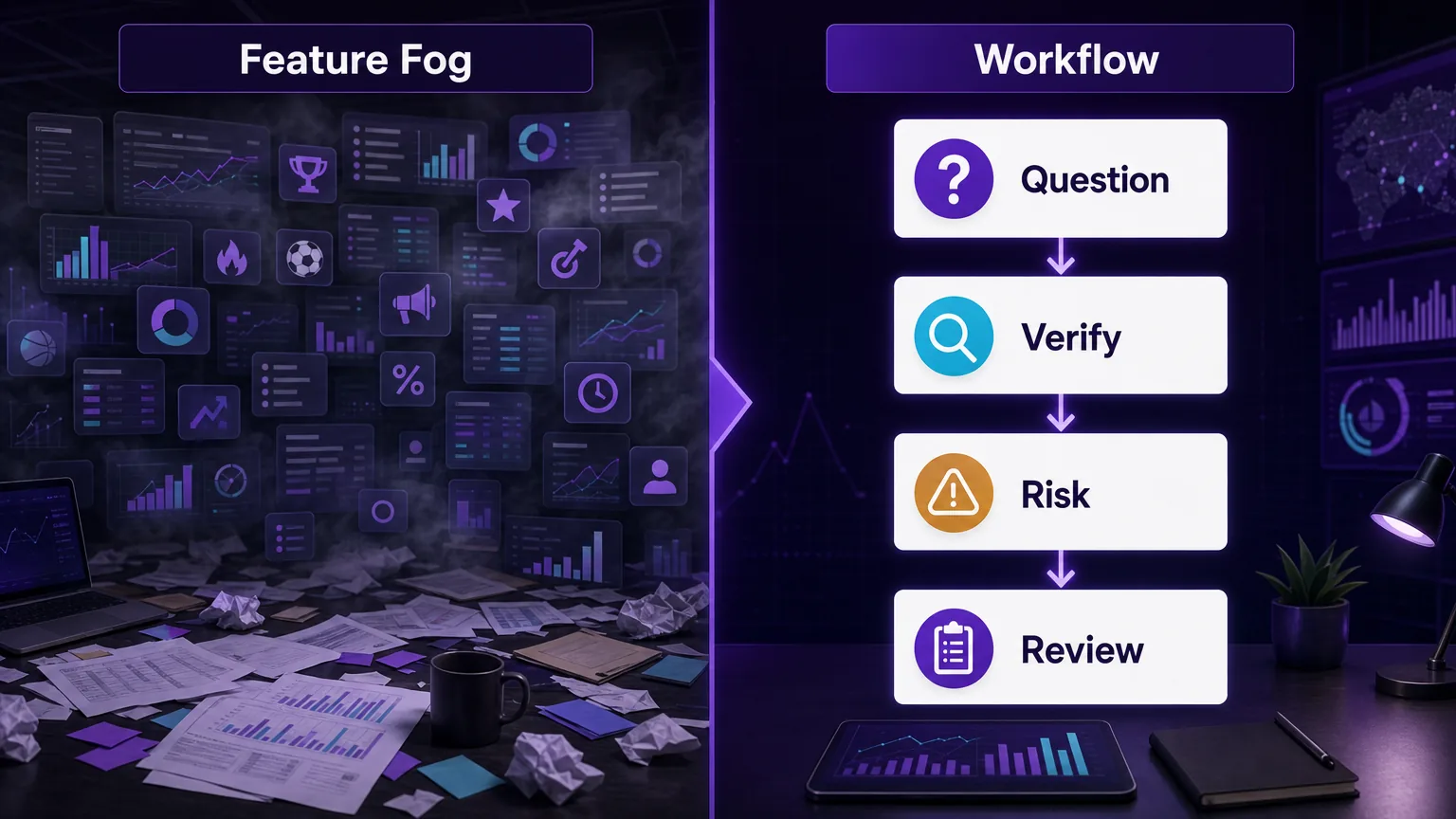
Most bettors do not need less friction. They need better friction. The wrong friction is scrolling through ten tabs, listening to conflicting picks, and chasing the last confident voice. The right friction is a disciplined sequence that slows down weak bets before they become real money.
MonsterGPT can fit that second version. It can also fit the first if the user lets it. That is why this review cannot say “buy it” without conditions. The buyer matters.
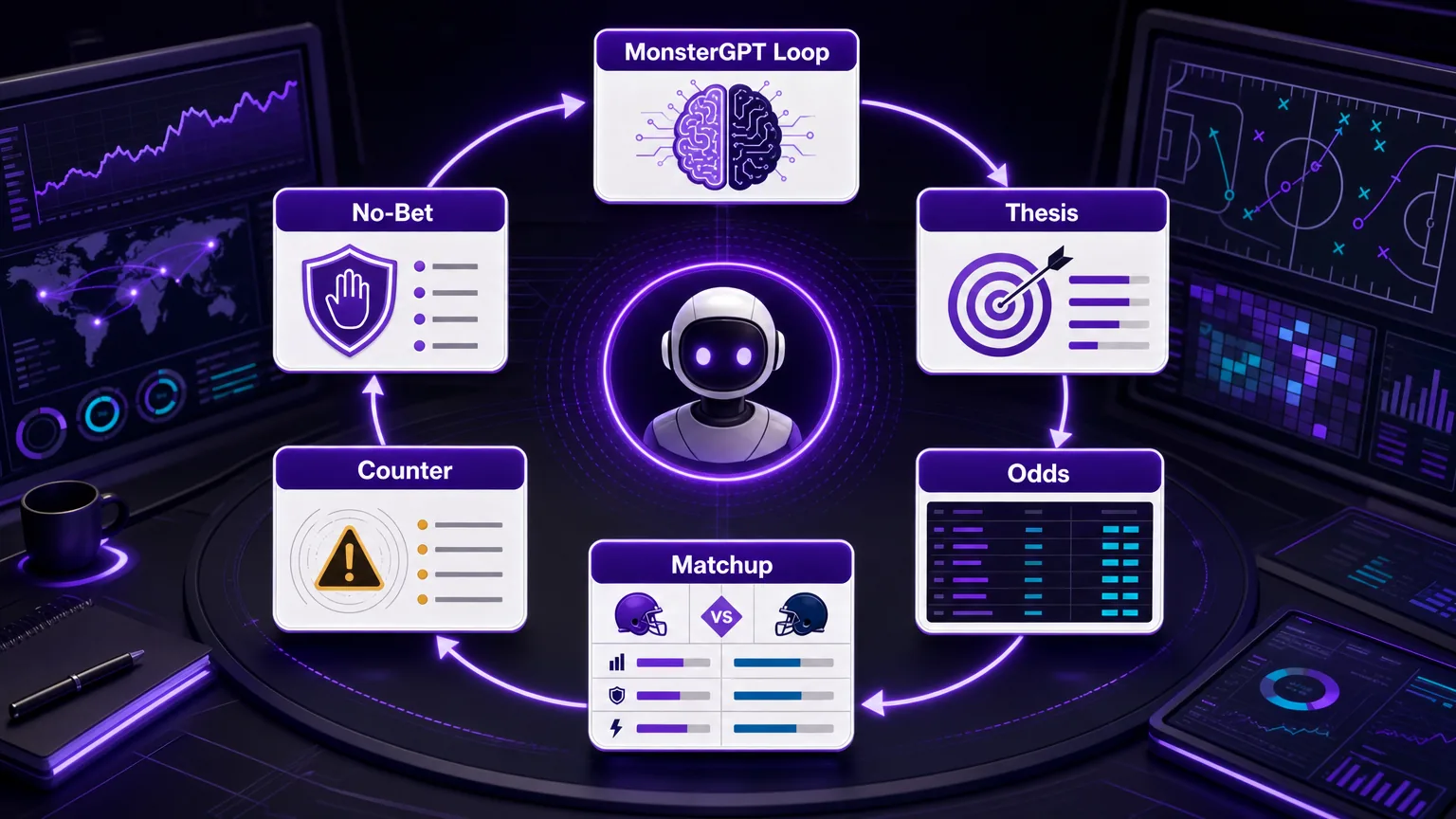
A Better Prompt Workflow
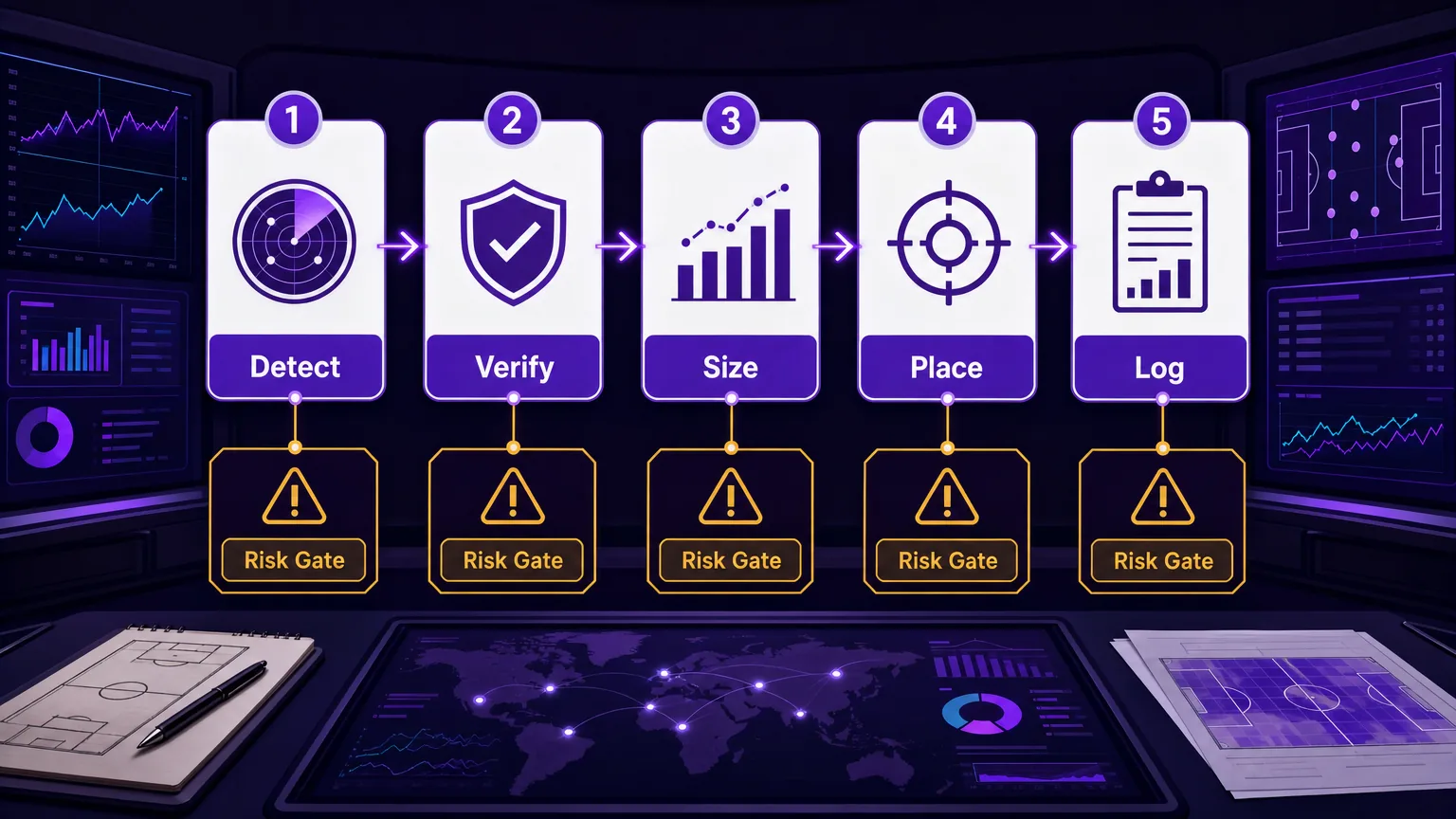
Use this workflow before any bet idea goes from thought to ticket.
| Step | Prompt job | Why it matters |
|---|---|---|
| 1 | Define the bet thesis | Forces you to say what you believe before the AI improves it |
| 2 | Ask for relevant context | Moves the output from opinion to research checklist |
| 3 | Ask for the counterargument | Stops the assistant from becoming a confirmation machine |
| 4 | Check price sensitivity | Reminds you that a good angle can become bad at the wrong number |
| 5 | Define the no-bet condition | Creates a pass gate before emotion enters |
| 6 | Log the final decision | Turns outcomes into reviewable process data |
Here is a practical prompt stack.
First prompt: “I am considering [bet]. Before giving an opinion, list the matchup, player, team, market, and price factors that should matter.”
Second prompt: “What recent data should I inspect in the lab before deciding?”
Third prompt: “What is the strongest argument against this bet?”
Fourth prompt: “At what price or line would this stop being attractive?”
Fifth prompt: “Give me a no-bet checklist for this specific market.”
Sixth prompt: “Summarize the final decision in a log entry with thesis, price, stake rule, reason to pass, and review note.”
Notice what is missing. There is no “give me a lock.” There is no “build me a guaranteed parlay.” There is no “what is the safest bet tonight?” Those prompts invite the wrong relationship with the tool.
MonsterGPT should make it harder to bet badly. If it only makes it easier to bet quickly, the user is misusing it.
Full Lab Access
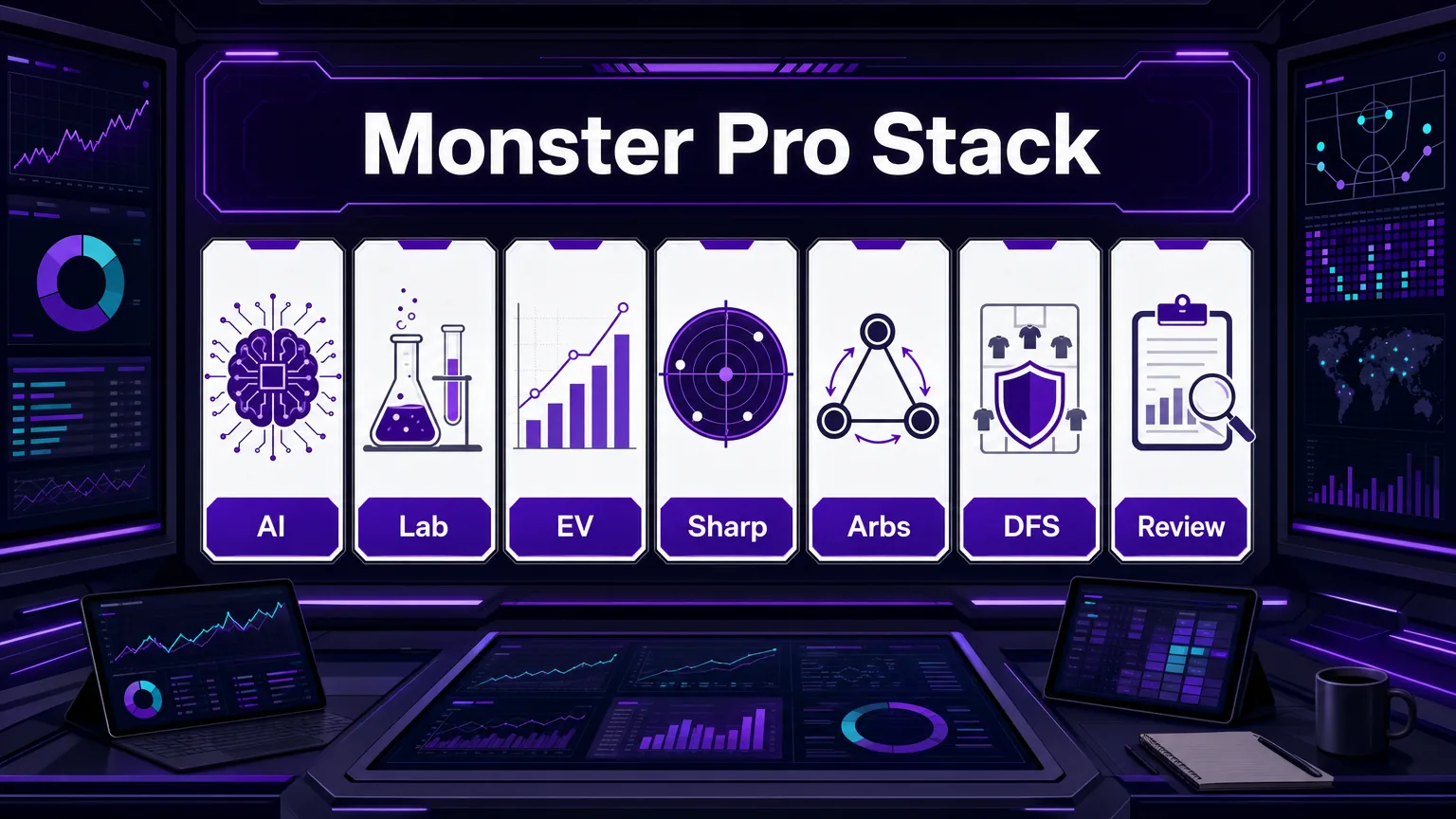
The MonsterGPT page says it includes Full Lab Access. The public feature language references AI player projections, hit rates, odds comparison, stat shack, game logs, and defense versus position rankings. That matters because the assistant should not float above the data. It should help you interrogate it.
The lab pieces can each play a different role.
Projections help frame expectation. They should not be treated as destiny.
Hit rates can show historical context. They can also seduce the user into ignoring price, sample quality, or changing role.
Odds comparison helps with line shopping. This is one of the most practical disciplines because the same bet can be acceptable at one price and poor at another.
Game logs help with recent usage and performance context. They can also mislead if you use them without matchup, role, minutes, or opponent context.
Defense versus position rankings can point toward matchup pressure. They are not a one-click prop answer.
This is why the best MonsterGPT workflow is a loop, not a chat. Ask the assistant what to inspect. Check the lab. Ask for the counterargument. Check price. Decide whether the bet survives.
If you want a deeper article on this part, read Sports Betting Data Lab. That guide should own the lab-specific explanations so this MonsterGPT review can stay focused on the assistant workflow.
Who MonsterGPT Fits
MonsterGPT fits bettors who want structure around research questions.
| Buyer | Good fit when | Bad fit when |
|---|---|---|
| Player prop bettor | You need matchup, projection, log, and price questions before betting | You only want a yes/no prop pick |
| Parlay builder | You want correlation, fragility, and leg-quality checks | You want AI to create long-shot slips with no risk review |
| Beginner | You want to learn what to inspect before betting | You want the tool to replace learning |
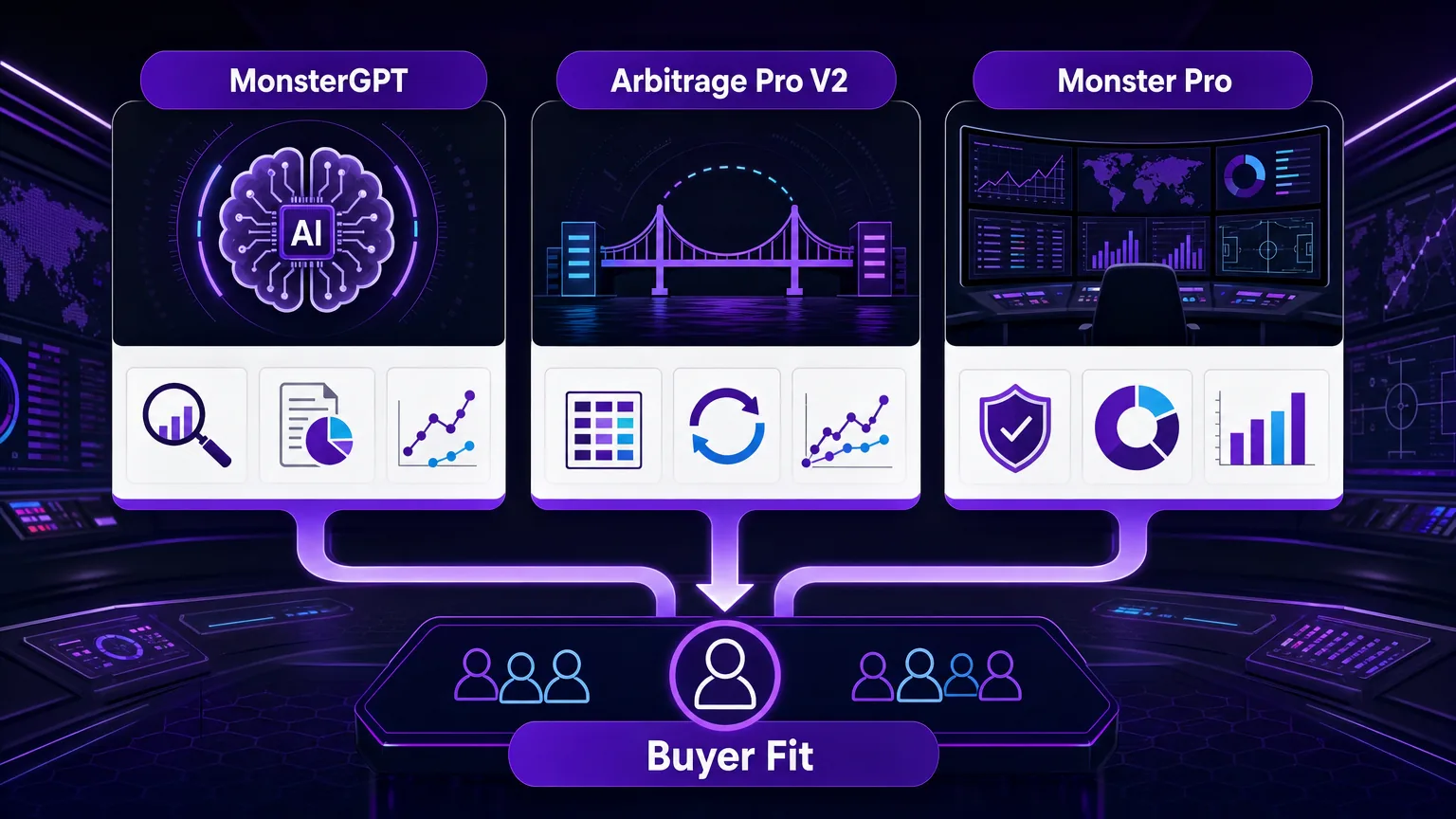
| Existing Monster Bet user | You want the AI layer plus lab access | You need +EV, sharp money, arbitrage, and DFS in one stack |
The good-fit buyer has a process problem. They are not trying to outsource responsibility. They are trying to improve the questions that come before the ticket.
That buyer can get value from a tool like MonsterGPT even when it tells them not to bet. In fact, that may be the cleanest sign of value. A product that helps you pass on weak action is doing useful work.
The bad-fit buyer wants certainty. They want a tool to give permission. They are drawn to confident language because they do not want to sit with risk. That buyer should not use AI for betting decisions until their bankroll rules and review habits are stronger.
Who Should Skip
Skip MonsterGPT if you expect guaranteed outcomes.
Skip it if you are not willing to compare prices.
Skip it if you will ask for picks but never ask for counterarguments.
Skip it if you do not have a bankroll rule.
Skip it if you will judge the product entirely on one win or one loss.
Those caveats are not filler. They are the trust architecture. A review that only praises is just an ad. A review that tells the wrong buyer to leave earns the right to recommend the product to the right buyer.
MonsterGPT may be useful for the right bettor. But if the user is not ready to slow down, inspect, and log decisions, the tool can become another layer of noise.
Seven-Day Prompt Test
Because MonsterGPT is listed weekly, evaluate it weekly.
Day one: create a baseline. Write down how you currently research bets. Be honest. If the answer is “I check a couple stats and tail what sounds good,” write that. The baseline has to be ugly enough to be useful.
Day two: ask MonsterGPT only for research questions, not picks. Build the checklist before asking for any angle.
Day three: run three player props through the prompt workflow. At least one should end as a no-bet.
Day four: use the lab access. Check projection, hit-rate context, odds comparison, game logs, and matchup. Record which piece actually changed your decision.
Day five: ask for counterarguments. If the assistant cannot produce a strong reason to pass, rewrite the prompt. Do not accept easy agreement.
Day six: check your behavior. Did you bet faster, or did you inspect better? Faster is not the goal unless it comes after better structure.
Day seven: decide renewal. Ask one question: did MonsterGPT change my process enough to justify another week?
The answer may be yes. It may be no. Both are useful if the test is honest.
Verdict
MonsterGPT is not a magic betting brain. It is a tool that can help the right user structure betting research.
That distinction is the whole verdict.
If you want a confident voice to tell you what to bet, do not buy it for that reason. If you want a research co-pilot that helps you ask better questions, inspect lab data, consider counterarguments, and define no-bet conditions, MonsterGPT deserves inspection.
Check the live Whop page here: MonsterGPT on Whop.
Before joining, say the decision out loud:
“I am not buying MonsterGPT because AI sounds sharp. I am buying it only if it improves the questions I ask before risking money.”
If that sentence feels annoying, wait.
If it feels accurate, the offer is worth a disciplined look.
FAQ
What is MonsterGPT?
MonsterGPT is a Monster Bet Whop product publicly positioned as an AI betting assistant with Full Lab Access. The page describes use cases such as player props, game analysis, bankroll advice, and parlay help.
How much does MonsterGPT cost?
At research time, the public Whop page listed MonsterGPT at $27/week. Recheck the live Whop page before publishing or buying because prices can change.
Does MonsterGPT guarantee winning bets?
No. No sports betting tool should be treated as a guarantee. MonsterGPT may support research, but users still face betting risk, variance, line movement, price sensitivity, and decision errors.
Is MonsterGPT better than Monster Pro?
Not universally. MonsterGPT is narrower and cheaper. Monster Pro is the broader stack at $90/week. Read Monster Pro vs MonsterGPT for the full comparison.
What should I ask MonsterGPT?
Ask for context, counterarguments, price sensitivity, no-bet conditions, and logging structure. Do not only ask for picks.