The Short Version
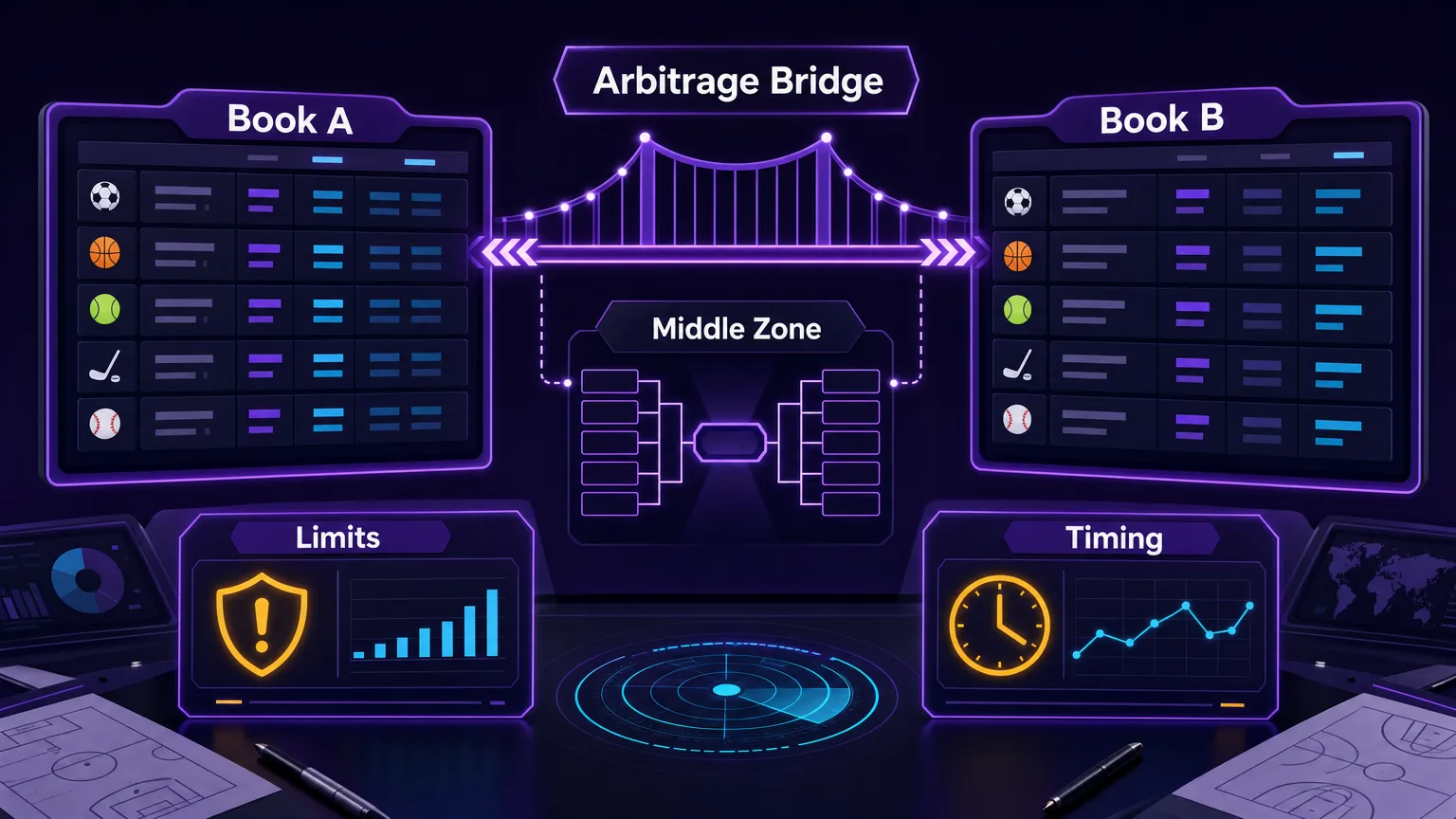
A middle is a betting position where two lines create an overlapping result zone. If the final result lands inside that zone, both sides can win. If it does not, the bettor may win one side and lose the other, or take a smaller loss depending on prices and stakes. A middle can be attractive, but it is not the same as a guaranteed arbitrage.
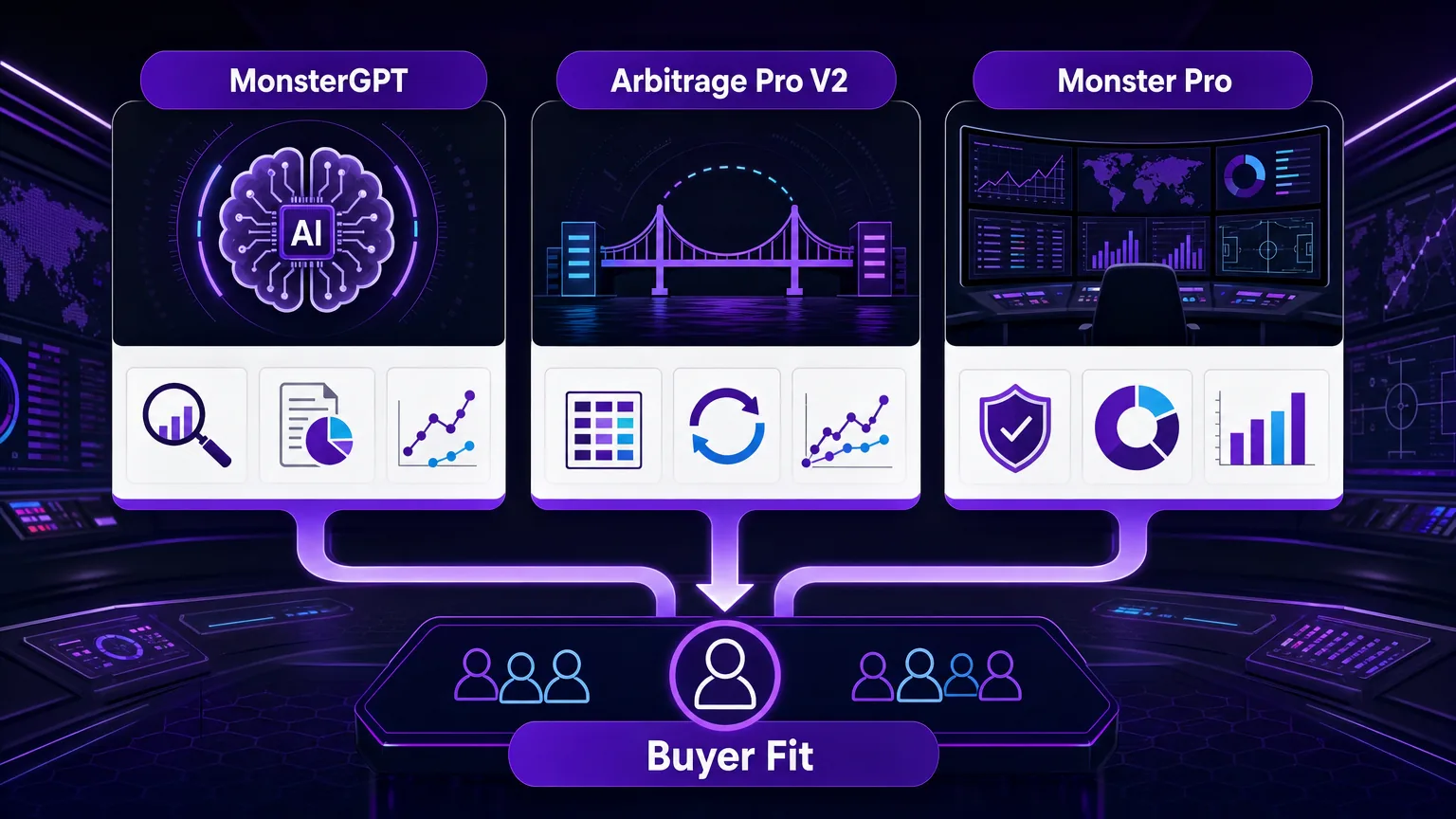
Arbitrage Pro V2 is the most relevant Monster Bet product here because the extracted Whop listing included a Middles Finder alongside the Arbitrage Scanner, multi-book monitoring, MonsterGPT, and Full Lab Access. Monster Pro also includes Arbitrage and Middles as part of the complete stack. If middles are the main job, open Arbitrage Pro V2 on Whop. If middles are one part of a broader betting process, compare Monster Pro.
This guide explains the concept and the workflow. It does not promise that middles are easy money. Execution, price, rules, and sizing still matter.
What A Middle Is
A middle usually appears when two different numbers are available on opposite sides of the same market. For example, one sportsbook may offer a team at +4.5 while another offers the opponent at -2.5. If the final margin lands on 3 or 4, both bets may win. That is the middle zone.
The appeal is clear: there is a possibility of winning both sides. But the position still has a payoff structure. If the result does not land inside the middle, one side may lose. The value depends on line width, odds, stake sizes, probability of landing in the zone, and execution quality.
| Middle component | Why it matters |
|---|---|
| Line gap | Wider gaps create more possible middle outcomes. |
| Price | Bad prices can make the position unattractive. |
| Stake sizing | Changes downside and upside. |
| Market rules | Different grading rules can break the setup. |
| Timing | The second side may disappear before action. |
| Result distribution | Some numbers are more valuable than others. |
A middles finder can help locate candidates. The bettor still decides whether the candidate is worth acting on.
The One Lie About Middles
The lie: "If both sides can win, the bet is safe."
A middle can have upside, but it can also have downside. The fact that both sides can win in one result zone does not mean the overall position is risk-free.
The fix: evaluate the full payoff, not only the dream outcome.
Before entering a middle, ask what happens if the result lands outside the zone. How much can you lose? How likely is the zone? Are the prices fair? Are the lines still available? Are the market rules identical?
The number: the middle width.
A one-point middle is not the same as a three-point middle. A middle across key numbers is not the same as a random gap. The width and quality of the zone matter.
Where Arbitrage Pro V2 Fits
Arbitrage Pro V2 is designed for users focused on arbitrage and middles. The extracted listing included a Middles Finder and multi-book monitoring across 20+ sportsbooks. That makes it the natural CTA for users whose main goal is finding overlapping line opportunities.
The product should be evaluated by usable candidates, not raw alerts. A middle alert is useful only if the books are available to you, the lines are still live, the market rules match, and the payoff structure is acceptable.
CTA: Open Arbitrage Pro V2 on Whop.
Where Monster Pro Fits
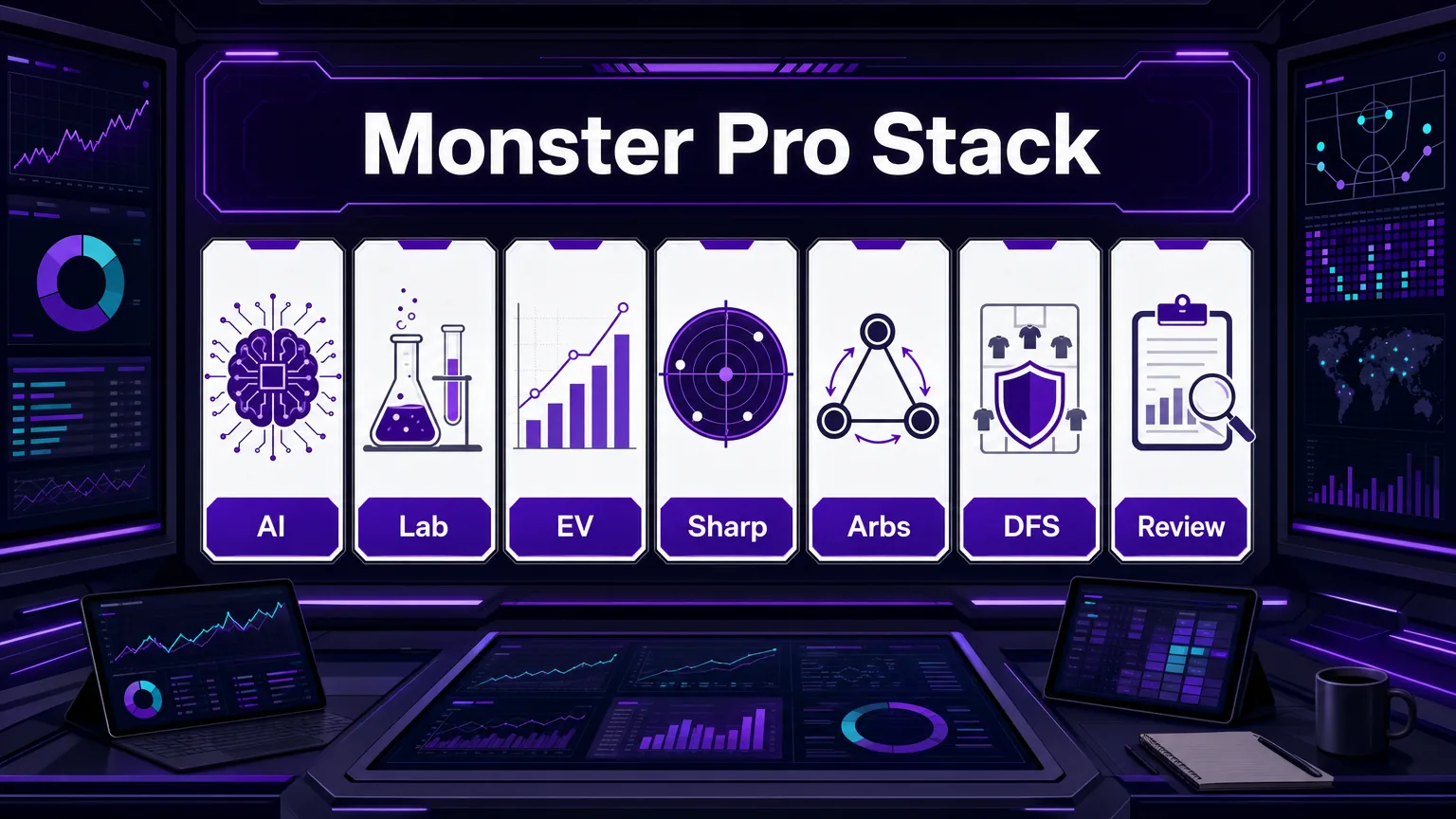
Monster Pro includes Arbitrage and Middles, but it also includes Full Lab Access, MonsterGPT, Positive EV Finder, Sharp Money Scanner, and DFS Optimizer. It is better for users who want middles inside a complete workflow.
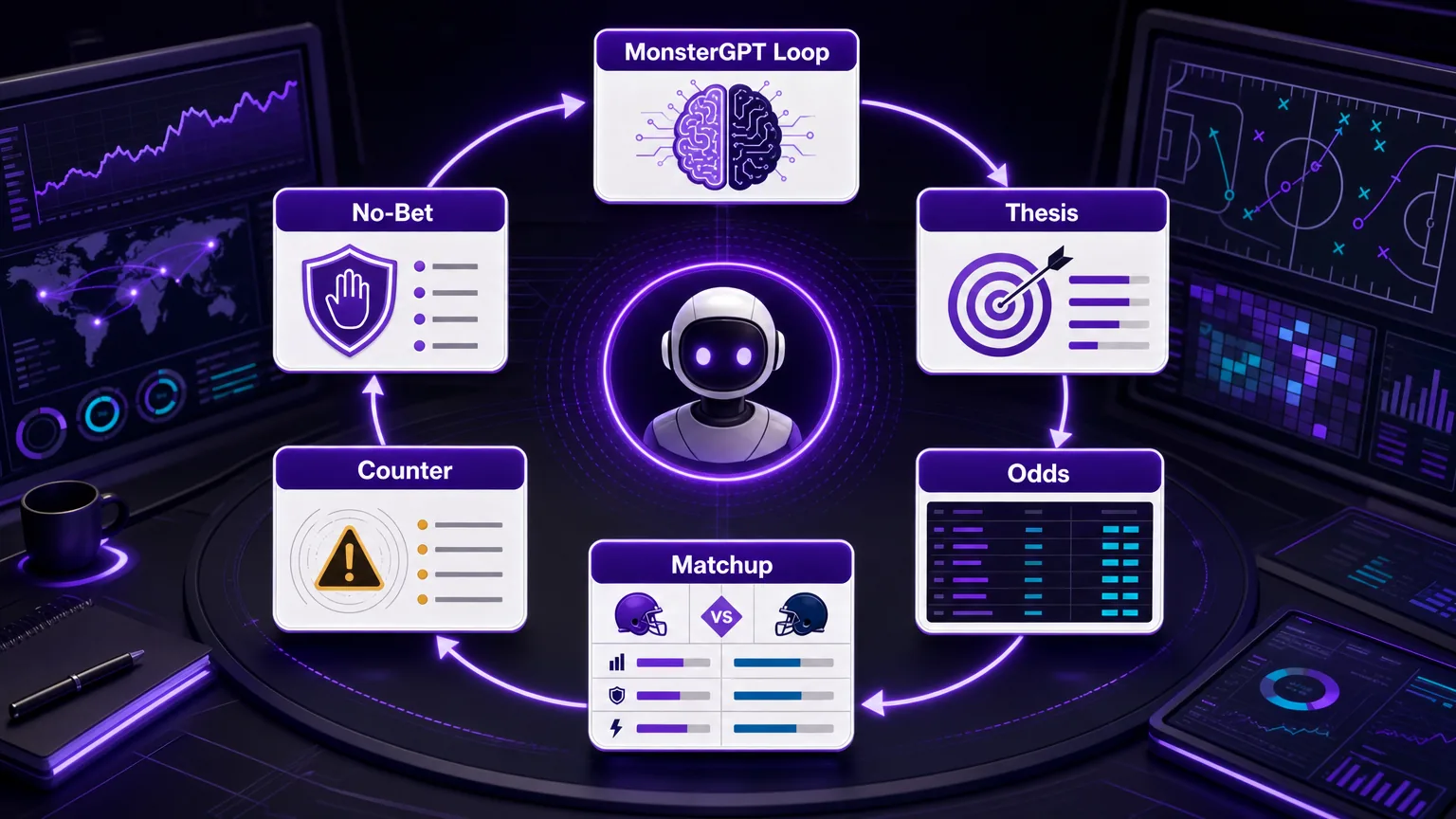
For example, a Monster Pro user might identify market movement through the Sharp Money Scanner, compare prices across books, inspect whether a middle exists, ask MonsterGPT to summarize the execution checklist, and log the position. That broader context can matter for active bettors.
CTA: Open Monster Pro on Whop.
The Anatomy Of A Middle
A middle has three parts:
- The first side.
- The second side.
- The overlap zone.
The user needs to know the exact lines and prices. They also need to understand whether the market includes overtime, whether pushes are possible, and how each side grades.
A useful middle worksheet includes:
| Field | Example purpose |
|---|---|
| Sport and market | Identify the position clearly |
| Book one and line | First side |
| Book two and line | Second side |
| Odds on both sides | Price quality |
| Middle zone | Outcomes where both can win |
| Push outcomes | Outcomes where one side may push |
| Downside | What happens outside the zone |
| Stake sizing | Controls payoff profile |
| Rules check | Prevents mismatch |
This turns a middle from a vague idea into a position that can be reviewed.
How Middles Differ From Arbitrage
Arbitrage usually tries to lock a positive result across outcomes. Middles usually create an upside zone where both sides can win while accepting some downside outside that zone.
| Category | Arbitrage | Middle |
|---|---|---|
| Main goal | Cover outcomes at favorable prices | Capture overlapping result zone |
| Downside | Ideally none if executed perfectly, though execution risk remains | Usually present outside the middle zone |
| Key risk | One side moves, limits, market mismatch | Zone probability, pricing, stake structure |
| Tool fit | Arbitrage scanner | Middles finder |
| User skill | Fast execution and stake sizing | Payoff analysis and line sensitivity |
This distinction matters because users often use the words loosely. A middle is not automatically an arbitrage. Treat it as its own position type.
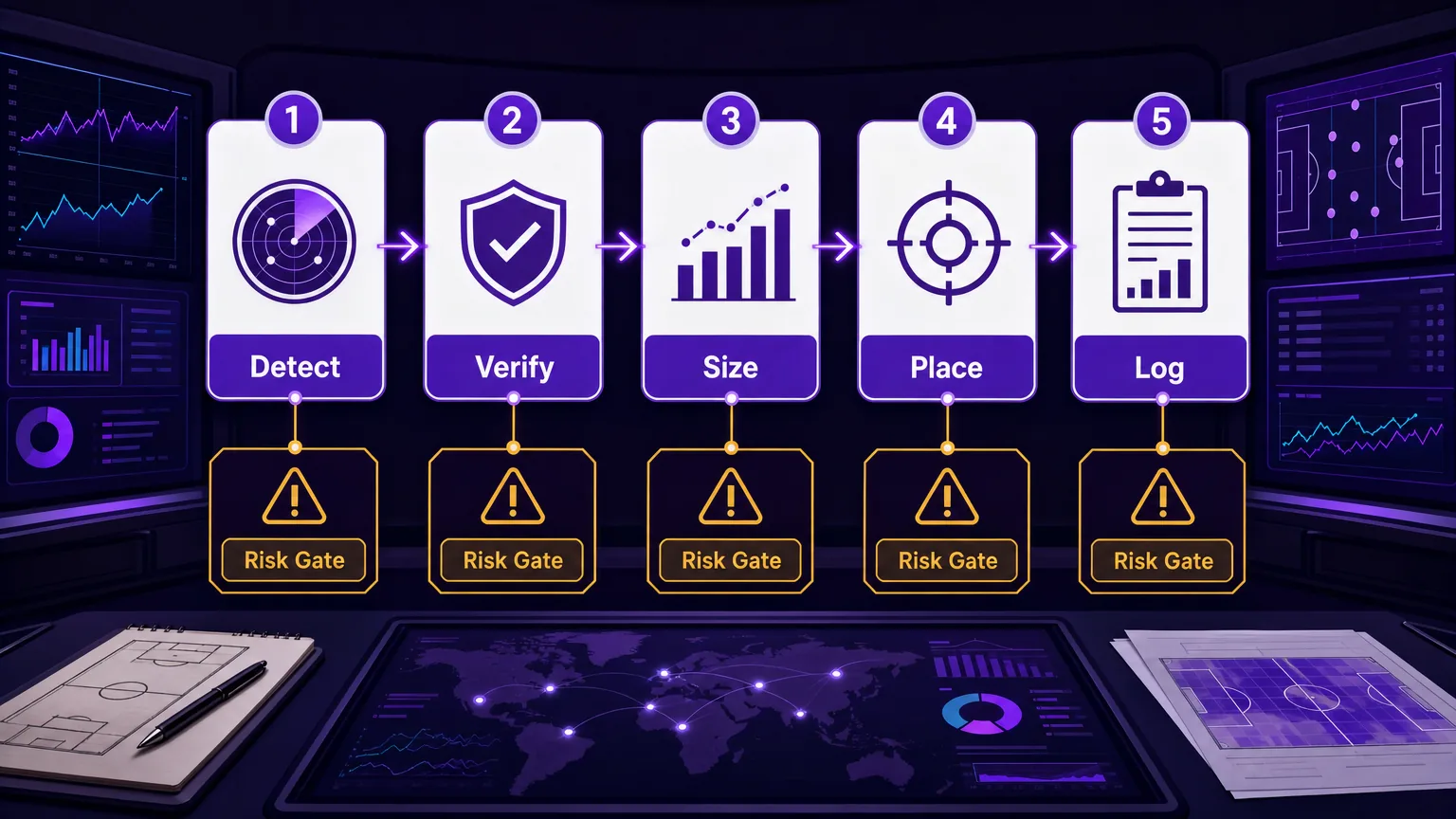
A Practical Middle Checklist
- Confirm both lines are for the same market.
- Confirm rules match across books.
- Identify the exact middle zone.
- Identify push outcomes.
- Calculate upside if the middle hits.
- Calculate downside if it misses.
- Check whether prices make the position reasonable.
- Confirm both books are available and funded.
- Confirm both lines are still live.
- Place carefully only if the full payoff is acceptable.
- Log the position and result.
A good checklist prevents the user from seeing only the upside.
Common Mistakes
Confusing Middles With Guaranteed Profit
A middle can win both sides, but it can also miss. Do not describe it as guaranteed.
Ignoring Push Rules
Pushes can change the payoff. Know the exact rules.
Taking Bad Prices
A wide middle at poor prices may be worse than a narrower middle at good prices. Price matters.
Forgetting Key Numbers
Some final margins occur more often than others. A middle through key numbers may be more meaningful.
Rushing Execution
If one side moves before the other is placed, the position changes. Slow down enough to verify.
Who Should Use A Middles Finder
A middles finder fits users who already understand lines, odds, book comparison, and payoff structures. It is especially relevant for bettors with multiple sportsbook accounts and enough discipline to pass on weak or confusing positions.
It is not ideal for beginners who want easy wins. It is also not ideal for users who cannot evaluate downside.
Internal Links
- Arbitrage Pro V2 review: Product Review
- Arbitrage tools guide: Arbitrage Betting Tools
- Monster Pro comparison: Monster Pro vs Arbitrage Pro V2
- Line shopping: Sportsbook Line Shopping
- Pricing: Monster Bet Pricing
Final Verdict
Middles are worth inspecting when the line gap, price, rules, and downside make sense. They are not automatic profit. Arbitrage Pro V2 is the focused Monster Bet product for Middles Finder access, while Monster Pro includes middles inside the broader stack.
For focused middles and arbitrage scanning, open Arbitrage Pro V2 on Whop.
For middles plus the full Monster Bet toolkit, open Monster Pro on Whop.
Seven-Day Workflow Test
A paid betting tool should be judged before renewal, not after a lucky or unlucky result. For Middles Betting Guide: When Overlapping Lines Are Worth Inspecting, the practical test is seven days long because the public Monster Bet offers are weekly products. The question is not whether Arbitrage Pro V2 or Monster Pro sounds useful. The question is whether it changes a decision that would otherwise be weaker, slower, or more emotional.
Start the test with a written baseline. Before opening the tool, write down how you normally handle this workflow: where the idea comes from, which data you check, how often you compare prices, what makes you pass, and how you decide stake size. This matters because a tool can feel valuable simply because it creates more activity. Activity is not the same as improvement. A cleaner process should make the bettor more selective, not just busier.
During the week, log every meaningful interaction in the middle-window inspection lane. Record the initial idea, the tool or screen used, the price or line checked, the strongest reason to pass, the final action, and the later review note. A pass counts as a useful outcome when the tool helps reject a weak position. That is one of the easiest values to miss. Better research is not only about finding more bets; it is also about removing bad ones before they reach the slip.
At the end of the week, score the tool on behavior, not outcome. Did it force better questions? Did it expose a stale price? Did it reveal a mismatch between the headline and the actual line? Did it reduce impulsive bets? Did it create a repeatable checklist? If the answer is no, the product may still be interesting, but it has not earned automatic renewal.
Renewal Checklist
Use this checklist before renewing, upgrading, or switching plans:
| Renewal question | Keep testing | Pause or downgrade |
|---|---|---|
| Did the tool change a real decision this week? | Yes, with examples in the log. | No, it mostly created browsing time. |
| Did it help you pass on weaker bets? | Yes, the pass reasons are visible. | No, it mostly increased action. |
| Did you compare price and risk before betting? | Yes, every logged idea has a price note. | No, the tool became a confidence shortcut. |
| Did the plan match the workflow? | Yes, Arbitrage Pro V2 or Monster Pro was used for middle-window inspection. | No, the plan's main features stayed unused. |
| Is the risk still explicit? | Yes, losses, limits, stale lines, and uncertainty are written down. | No, the tool made betting feel cleaner than it is. |
This checklist is deliberately strict. Sports betting tools should support research and workflow, but they do not guarantee wins, profit, or personal outcomes. The most useful Monster Bet plan is the one that earns a place in a disciplined routine. The least useful plan is the one that creates enough excitement to hide the absence of a routine.
Common Mistakes To Avoid
The first mistake is treating middle-window inspection as a complete betting process. It is one lane. It still has to connect to bankroll rules, sportsbook availability, timing, line movement, and a final pass condition. If those pieces are missing, the tool can increase confidence faster than it increases discipline.
The second mistake is judging the tool from one result. A winning bet can hide bad process, and a losing bet can follow good process. The better review is a sample of decisions: bets placed, bets passed, numbers compared, prompts asked, signals ignored, and renewal notes. That review is less exciting than a single result, but it is much harder to fool.
The third mistake is ignoring the specific risk in this lane: a middle can be mistaken for a riskless arbitrage position when the downside is not written down first. Write that risk at the top of the log. If the week proves that the risk is manageable, keep testing. If the week proves that the risk keeps showing up, do not solve it by buying a bigger plan. Solve the workflow first.
Practical Next Step
If this article describes the exact workflow you need to improve, inspect the relevant Monster Bet offer on Whop: open Arbitrage Pro V2 or Monster Pro on Whop. Use the link as the start of a test, not as a promise. Decide what the tool must prove before the next renewal date, then measure that proof in your own log.
Decision Log Template
Use this simple log while testing the ideas from Middles Betting Guide: When Overlapping Lines Are Worth Inspecting. The point is to capture the decision before the outcome changes the story.
| Field | What to write |
|---|---|
| Idea source | Where the bet, prop, lineup, signal, or line-shopping question came from. |
| Tool used | Which Monster Bet feature, article checklist, sportsbook screen, or research note changed the review. |
| Price checked | The exact number, book, and time checked before action. |
| Reason to pass | The strongest reason not to bet, even if you eventually placed it. |
| Final action | Bet, pass, wait, reduce stake, compare another book, or review later. |
| Review note | What the decision teaches after the result, without pretending the result proves everything. |
This template keeps the workflow grounded. It also protects the reader from the most common failure in middle-window inspection: replacing process with feeling. A tool can surface information, but it cannot force a bettor to respect the information. The written log creates that friction.
The cleanest version is short. One row per decision is enough. If the log becomes too complicated, the user will stop using it. If it is too vague, it will not reveal whether Arbitrage Pro V2 or Monster Pro changed anything meaningful. Keep the fields practical, review them before renewal, and judge the plan by repeated behavior rather than one exciting result.