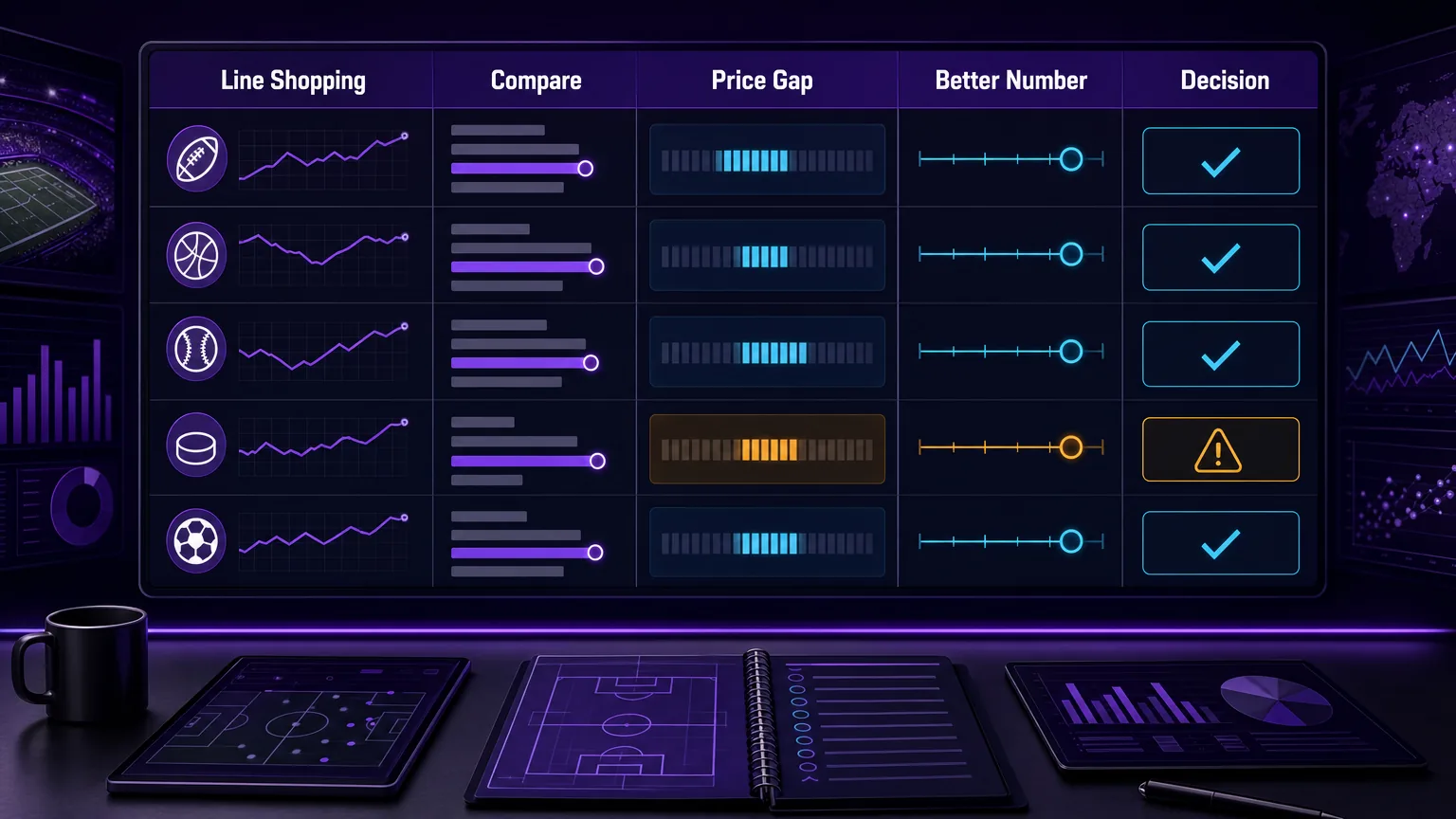
The Short Version
Line shopping means comparing the same market across multiple sportsbooks before betting. It is one of the least glamorous parts of sports betting, but it can change the entire decision. A player prop at one number may be playable. The same prop at a worse number may be a pass. A spread at +3.5 is not the same as +2.5. A price at +110 is not the same as -115.
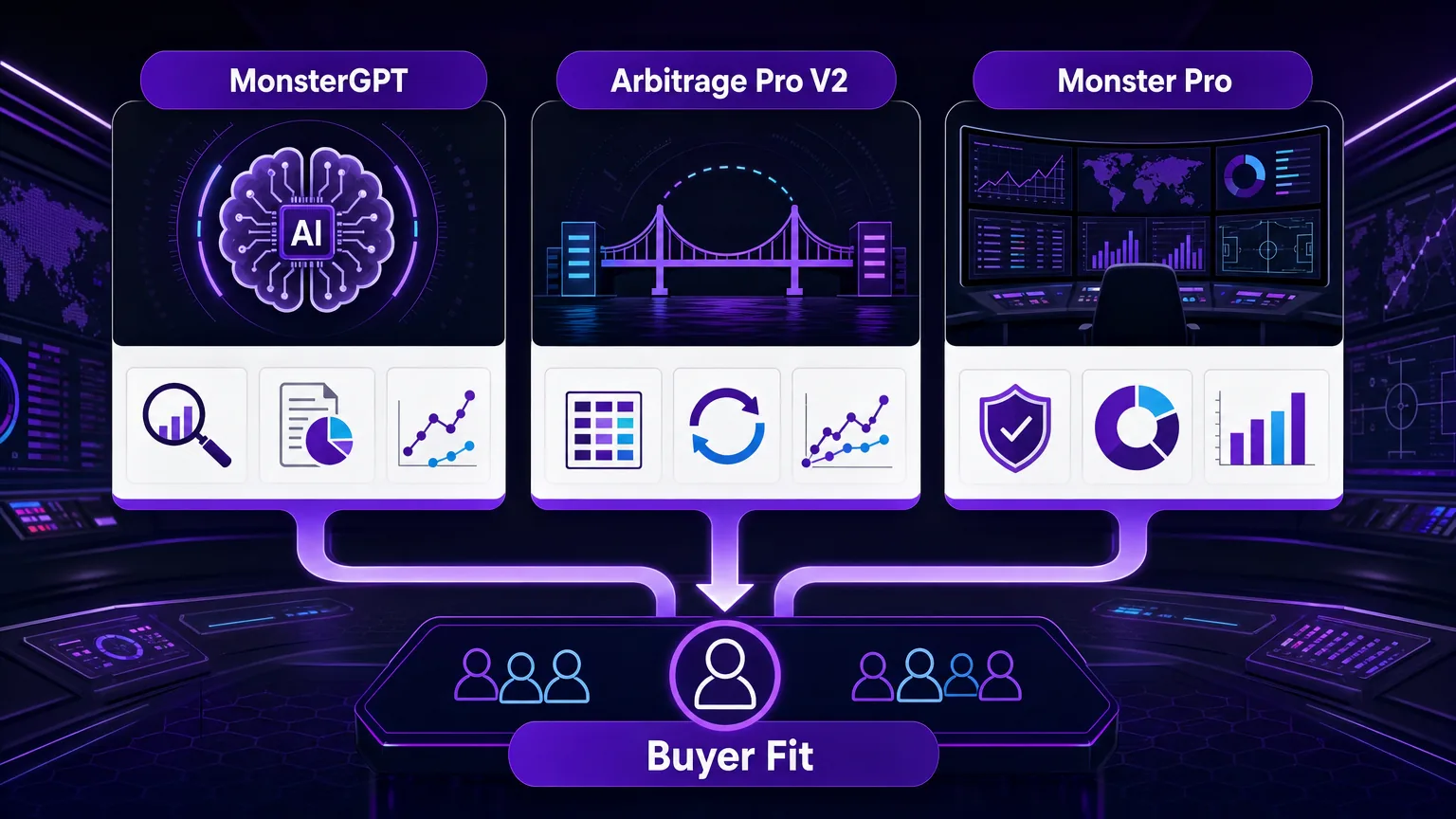
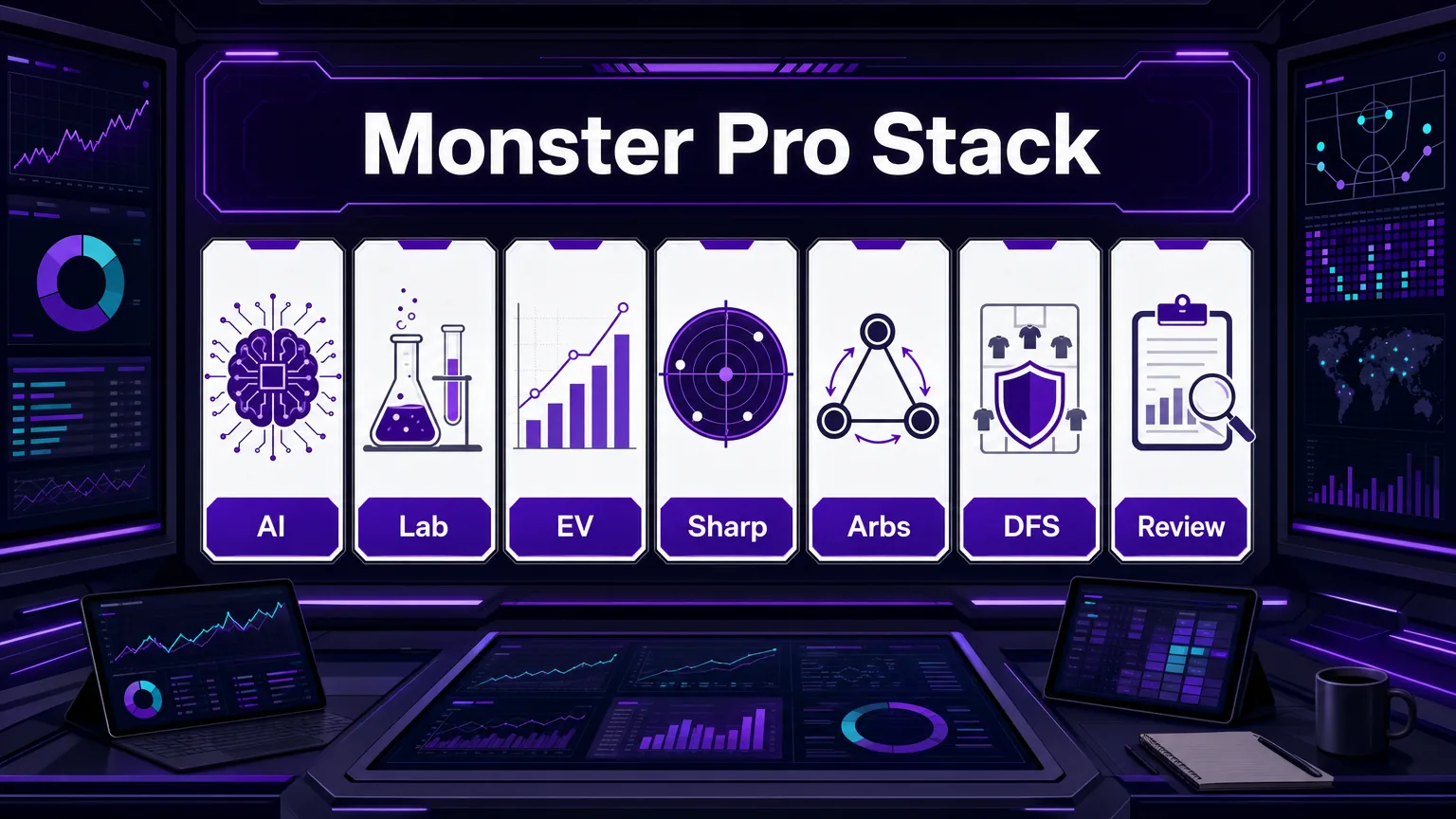
Monster Bet’s product ecosystem touches line shopping in several ways. MonsterGPT and Full Lab Access help with research and odds comparison. Arbitrage Pro V2 is built around multi-book monitoring, arbitrage, and middles. Monster Pro includes the complete stack, including arbitrage and middles plus Positive EV Finder and Sharp Money Scanner.
If your main problem is comparing books and finding price gaps, open Arbitrage Pro V2 on Whop. If you want odds comparison as part of AI-assisted research, open MonsterGPT. If you want the full market workflow, open Monster Pro.
What Line Shopping Means
Line shopping is the habit of checking multiple books before placing a bet. It is not just looking for the biggest payout. It is checking whether the exact line, price, rules, and market are still worth the bet.
A bettor who does not line shop may do strong research and still take a poor number. That is frustrating because the mistake happens at the final step.
Line shopping matters for:
| Market | Why one number matters |
|---|---|
| Spreads | Key numbers can change win, loss, or push outcomes. |
| Totals | Half-points can decide results. |
| Player props | A prop at 24.5 is not the same as 25.5. |
| Moneylines | Different odds change payout and implied probability. |
| Futures | Long prices vary widely across books. |
| Live betting | Fast movement makes price discipline harder. |
A data lab can identify an angle. Line shopping decides whether the angle is still worth acting on.
The One Lie About A Good Pick
The lie: "If the pick is good, the number does not matter."
The number always matters. A good idea at a bad price can become a bad bet. A marginal idea at an excellent price may become more interesting.
The fix: define the playable number before betting.
Before you open the bet slip, decide the worst line or price you are willing to accept. If the market moves beyond that, pass.
The number: the number you actually bet.
Your research does not grade at the number you liked ten minutes ago. It grades at the number you actually placed.
Where Monster Bet Tools Fit
MonsterGPT
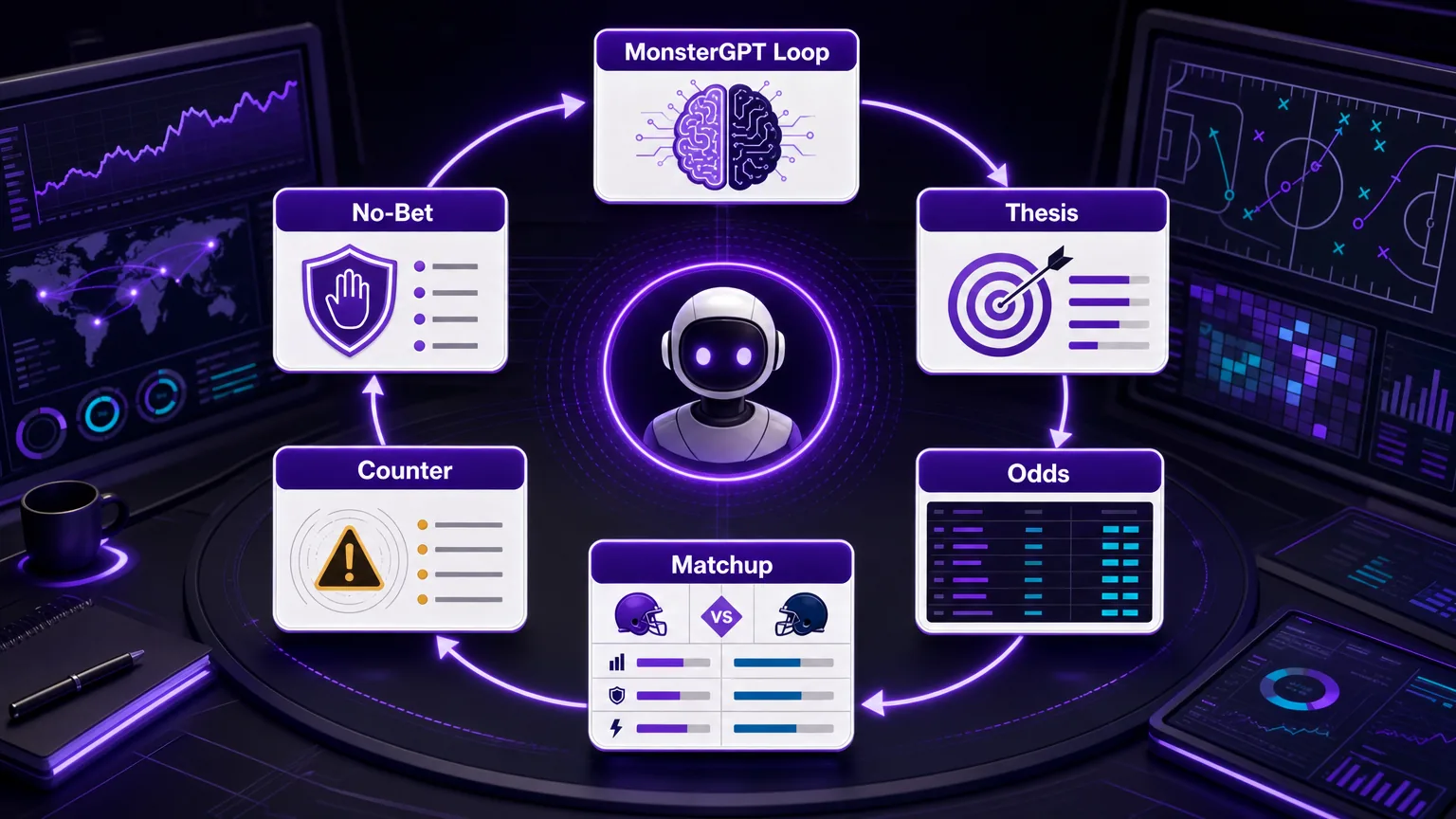
MonsterGPT can help compare research against available price. It can summarize whether a line move changes the original case, list pass conditions, and explain why a worse number may kill the bet.
Arbitrage Pro V2
Arbitrage Pro V2 is the clearest line-shopping product because it is built around arbitrage, middles, and multi-book monitoring. Its extracted listing referenced monitoring across 20+ sportsbooks. That coverage matters only if the books are available to the user, but the category fit is direct.
Monster Pro
Monster Pro includes odds-sensitive workflows across Positive EV Finder, Sharp Money Scanner, Arbitrage and Middles, MonsterGPT, and Full Lab Access. It is the right plan when line shopping is part of a broader market process.
Why Price Changes Expected Value
Every betting price implies a probability. When the price changes, the required probability changes. That means the same opinion can become better or worse depending on odds.
Example logic:
| Situation | Interpretation |
|---|---|
| You project a player over 20.5 points | Research starts with a possible edge |
| One book offers over 20.5 at -105 | The price may be playable |
| Another book offers over 21.5 at -120 | The bet is materially different |
| The line moves to 22.5 | Original thesis may no longer apply |
This is why line shopping is not optional for serious bettors. It protects the edge from being lost at execution.
How Line Shopping Supports Arbitrage
Arbitrage exists because books disagree. Without line shopping, the bettor may never see the disagreement. Arbitrage Pro V2’s multi-book monitoring is built for this kind of problem.
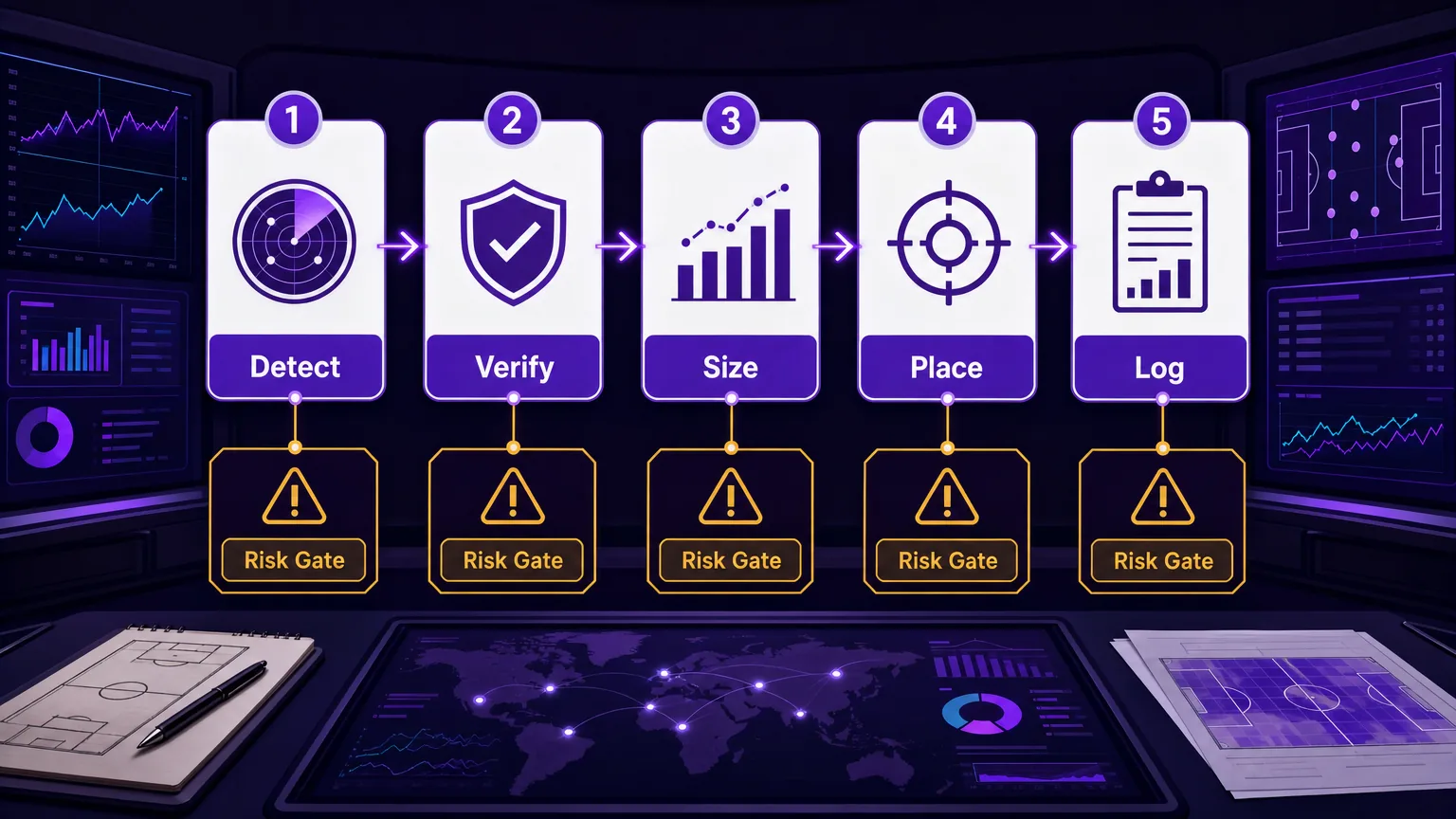
But line shopping for arbitrage has stricter requirements. The user must compare both sides, verify rules, confirm prices are live, and place both stakes correctly. A price gap is not enough. Execution completes the position.
Read the category guide: Arbitrage Betting Tools. For the product-specific review, read Arbitrage Pro V2 Review.
How Line Shopping Supports MonsterGPT Research
MonsterGPT can help the bettor connect research to price. After reviewing projections, hit rates, game logs, and matchup data, ask:
- "At what line does this prop become a pass?"
- "How does the case change if the line moves from 24.5 to 25.5?"
- "Which book price makes this candidate strongest?"
- "Summarize why taking a worse number may erase the edge."
This turns the assistant into a price-discipline tool instead of a pick generator.
How Line Shopping Supports Monster Pro
Monster Pro users may combine line shopping with Positive EV Finder, Sharp Money Scanner, Arbitrage and Middles, DFS Optimizer, Full Lab Access, and MonsterGPT. Price appears in almost every branch.
- Positive EV depends on price.
- Sharp-money signals depend on movement and current number.
- Arbitrage depends on book-to-book price gaps.
- Middles depend on line gaps.
- DFS can be influenced by market-implied game environments.
- AI research should include pass prices.
That is why line shopping is the connective tissue of the Monster Pro workflow.
A Practical Odds Comparison Workflow
- Identify the bet candidate from research.
- Write the playable line and worst acceptable price.
- Compare multiple books.
- Confirm market rules match.
- Check whether another book has a better number.
- Ask whether the current number still supports the thesis.
- Place only if the price passes.
- Log the book, line, price, and later market movement.
The workflow is simple, but many bettors skip it because it feels tedious. That is exactly why it matters.
Common Mistakes
Betting The First Available Line
Convenience costs money. Check other books if you can.
Ignoring Half-Points
Half-points can decide outcomes. Do not treat nearby lines as identical.
Comparing Different Markets
Make sure the market rules, period, and participants match.
Chasing A Moved Line
If the best number is gone, the bet may be gone.
No Price Log
Without a log, you cannot know whether you consistently take good or bad numbers.
Internal Links
- Arbitrage Pro V2 review: Product Review
- Arbitrage tools: Arbitrage Betting Tools
- Data lab: Sports Betting Data Lab
- Positive EV: Positive EV Betting
- Sharp money: Sharp Money Scanner Guide
- Pricing: Monster Bet Pricing
Final Verdict
Line shopping is not optional if price matters, and price always matters. MonsterGPT can support price-aware research. Arbitrage Pro V2 is the focused product for multi-book monitoring, arbitrage, and middles. Monster Pro is the full-stack choice when price discipline connects to +EV, sharp money, arbitrage, and broader research.
For multi-book monitoring and arbitrage workflows, open Arbitrage Pro V2 on Whop.
For AI-assisted price-aware research, open MonsterGPT on Whop.
For the full market toolkit, open Monster Pro on Whop.
Seven-Day Workflow Test
A paid betting tool should be judged before renewal, not after a lucky or unlucky result. For Sportsbook Line Shopping: Why One Number Can Change the Whole Bet, the practical test is seven days long because the public Monster Bet offers are weekly products. The question is not whether Arbitrage Pro V2, MonsterGPT, or Monster Pro sounds useful. The question is whether it changes a decision that would otherwise be weaker, slower, or more emotional.
Start the test with a written baseline. Before opening the tool, write down how you normally handle this workflow: where the idea comes from, which data you check, how often you compare prices, what makes you pass, and how you decide stake size. This matters because a tool can feel valuable simply because it creates more activity. Activity is not the same as improvement. A cleaner process should make the bettor more selective, not just busier.
During the week, log every meaningful interaction in the line-shopping discipline lane. Record the initial idea, the tool or screen used, the price or line checked, the strongest reason to pass, the final action, and the later review note. A pass counts as a useful outcome when the tool helps reject a weak position. That is one of the easiest values to miss. Better research is not only about finding more bets; it is also about removing bad ones before they reach the slip.
At the end of the week, score the tool on behavior, not outcome. Did it force better questions? Did it expose a stale price? Did it reveal a mismatch between the headline and the actual line? Did it reduce impulsive bets? Did it create a repeatable checklist? If the answer is no, the product may still be interesting, but it has not earned automatic renewal.
Renewal Checklist
Use this checklist before renewing, upgrading, or switching plans:
| Renewal question | Keep testing | Pause or downgrade |
|---|---|---|
| Did the tool change a real decision this week? | Yes, with examples in the log. | No, it mostly created browsing time. |
| Did it help you pass on weaker bets? | Yes, the pass reasons are visible. | No, it mostly increased action. |
| Did you compare price and risk before betting? | Yes, every logged idea has a price note. | No, the tool became a confidence shortcut. |
| Did the plan match the workflow? | Yes, Arbitrage Pro V2, MonsterGPT, or Monster Pro was used for line-shopping discipline. | No, the plan's main features stayed unused. |
| Is the risk still explicit? | Yes, losses, limits, stale lines, and uncertainty are written down. | No, the tool made betting feel cleaner than it is. |
This checklist is deliberately strict. Sports betting tools should support research and workflow, but they do not guarantee wins, profit, or personal outcomes. The most useful Monster Bet plan is the one that earns a place in a disciplined routine. The least useful plan is the one that creates enough excitement to hide the absence of a routine.
Common Mistakes To Avoid
The first mistake is treating line-shopping discipline as a complete betting process. It is one lane. It still has to connect to bankroll rules, sportsbook availability, timing, line movement, and a final pass condition. If those pieces are missing, the tool can increase confidence faster than it increases discipline.
The second mistake is judging the tool from one result. A winning bet can hide bad process, and a losing bet can follow good process. The better review is a sample of decisions: bets placed, bets passed, numbers compared, prompts asked, signals ignored, and renewal notes. That review is less exciting than a single result, but it is much harder to fool.
The third mistake is ignoring the specific risk in this lane: a bettor can be right about the side and still buy a bad number. Write that risk at the top of the log. If the week proves that the risk is manageable, keep testing. If the week proves that the risk keeps showing up, do not solve it by buying a bigger plan. Solve the workflow first.
Practical Next Step
If this article describes the exact workflow you need to improve, inspect the relevant Monster Bet offer on Whop: open Arbitrage Pro V2, MonsterGPT, or Monster Pro on Whop. Use the link as the start of a test, not as a promise. Decide what the tool must prove before the next renewal date, then measure that proof in your own log.
Decision Log Template
Use this simple log while testing the ideas from Sportsbook Line Shopping: Why One Number Can Change the Whole Bet. The point is to capture the decision before the outcome changes the story.
| Field | What to write |
|---|---|
| Idea source | Where the bet, prop, lineup, signal, or line-shopping question came from. |
| Tool used | Which Monster Bet feature, article checklist, sportsbook screen, or research note changed the review. |
| Price checked | The exact number, book, and time checked before action. |
| Reason to pass | The strongest reason not to bet, even if you eventually placed it. |
| Final action | Bet, pass, wait, reduce stake, compare another book, or review later. |
| Review note | What the decision teaches after the result, without pretending the result proves everything. |
This template keeps the workflow grounded. It also protects the reader from the most common failure in line-shopping discipline: replacing process with feeling. A tool can surface information, but it cannot force a bettor to respect the information. The written log creates that friction.
The cleanest version is short. One row per decision is enough. If the log becomes too complicated, the user will stop using it. If it is too vague, it will not reveal whether Arbitrage Pro V2, MonsterGPT, or Monster Pro changed anything meaningful. Keep the fields practical, review them before renewal, and judge the plan by repeated behavior rather than one exciting result.