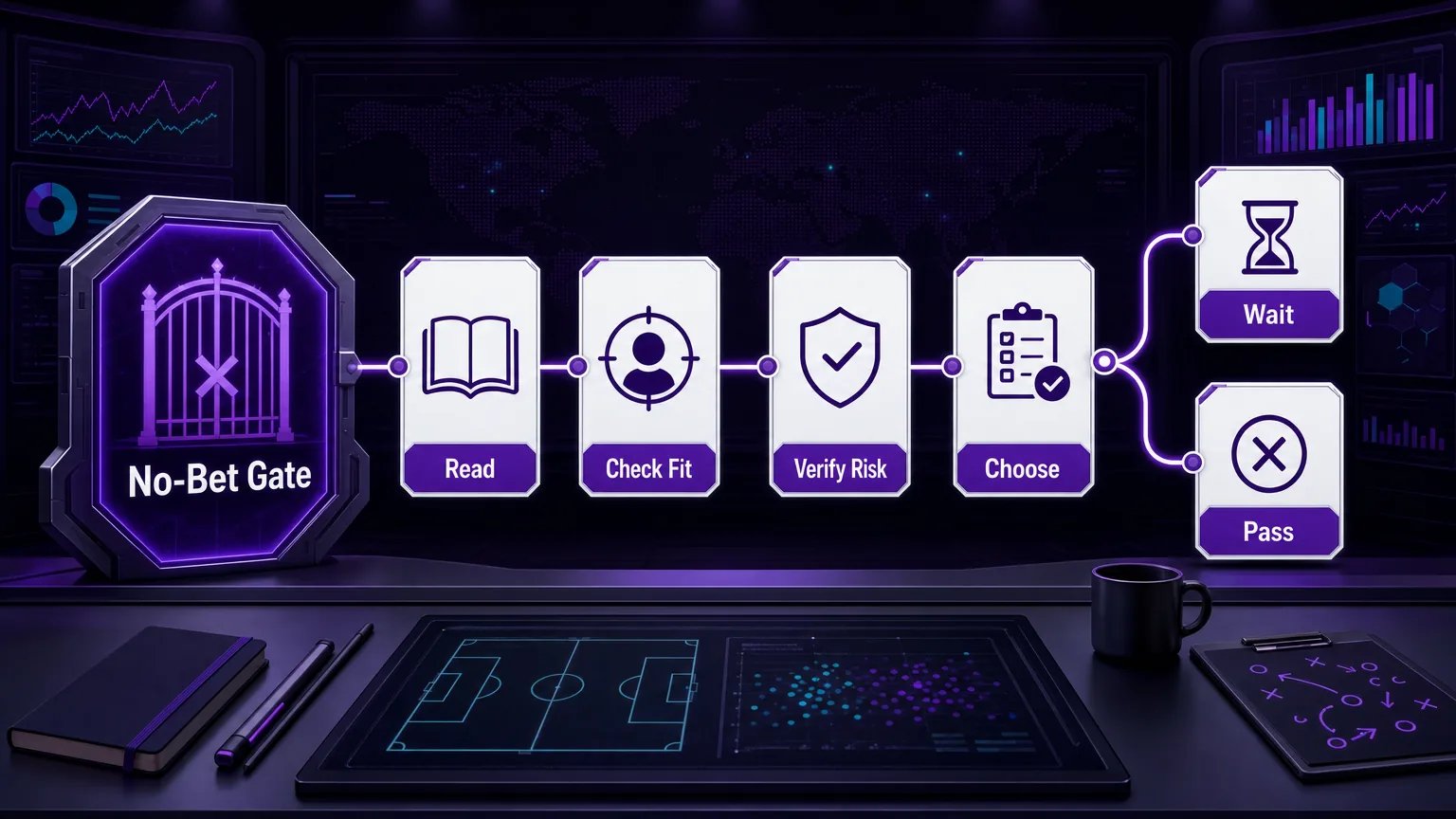
The Short Version
MonsterGPT is most useful when prompts force structure. A vague prompt asks for a pick. A strong prompt asks for evidence, counterarguments, price sensitivity, pass conditions, and a logged decision. That difference matters because sports betting tools should support research, not create false certainty.
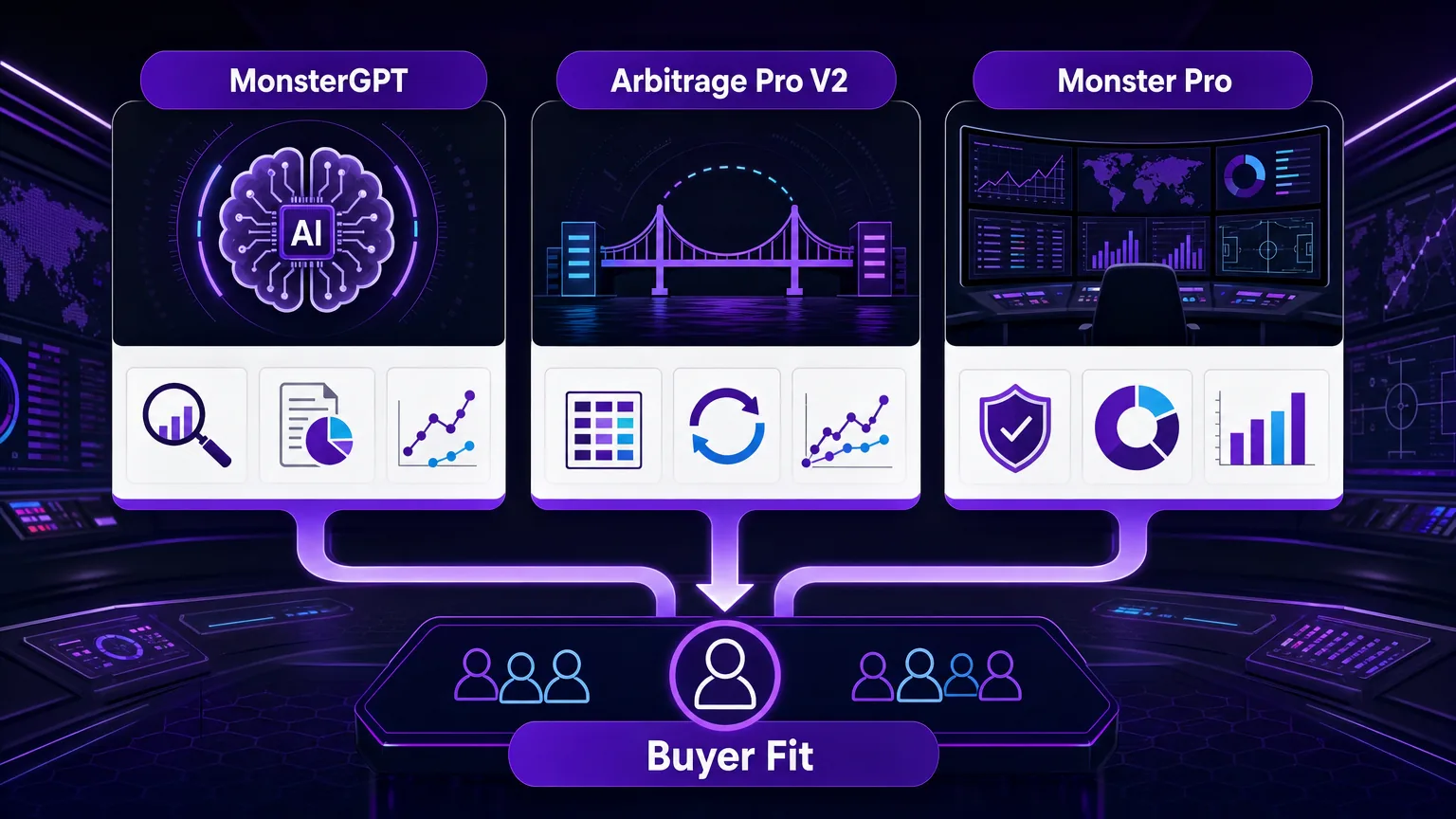
The extracted Whop research positioned MonsterGPT as an AI betting assistant plus Full Lab Access at $27/week. That makes it the natural product for users who want help interpreting projections, hit rates, odds comparison, game logs, matchup context, and betting questions. If that is your workflow, open MonsterGPT on Whop.
This article is a prompt guide, not a list of magic words. No prompt can guarantee winning bets. The goal is to make MonsterGPT more useful as a research assistant.
How To Use MonsterGPT Safely
Use MonsterGPT to organize thinking. Ask it to summarize, compare, pressure-test, and identify reasons to pass. Do not ask it to remove uncertainty.
A safe MonsterGPT workflow has four parts:
| Step | Question |
|---|---|
| Context | What sport, market, player, game, book, line, and price are being evaluated? |
| Data | What projections, hit rates, logs, matchups, and odds are relevant? |
| Decision | What would make this a bet, pass, or wait? |
| Risk | What could make the analysis wrong? |
If a prompt skips risk, rewrite it. If a prompt asks for certainty, rewrite it. If a prompt produces a confident answer without assumptions, ask for the assumptions.
The One Lie About AI Betting Prompts
The lie: "The right prompt can make AI pick winners."
The right prompt can make AI organize research better. It cannot make sports predictable. It cannot know every injury, role change, sportsbook rule, or late market move unless the relevant data is available and checked.
The fix: ask for a decision memo, not a pick.
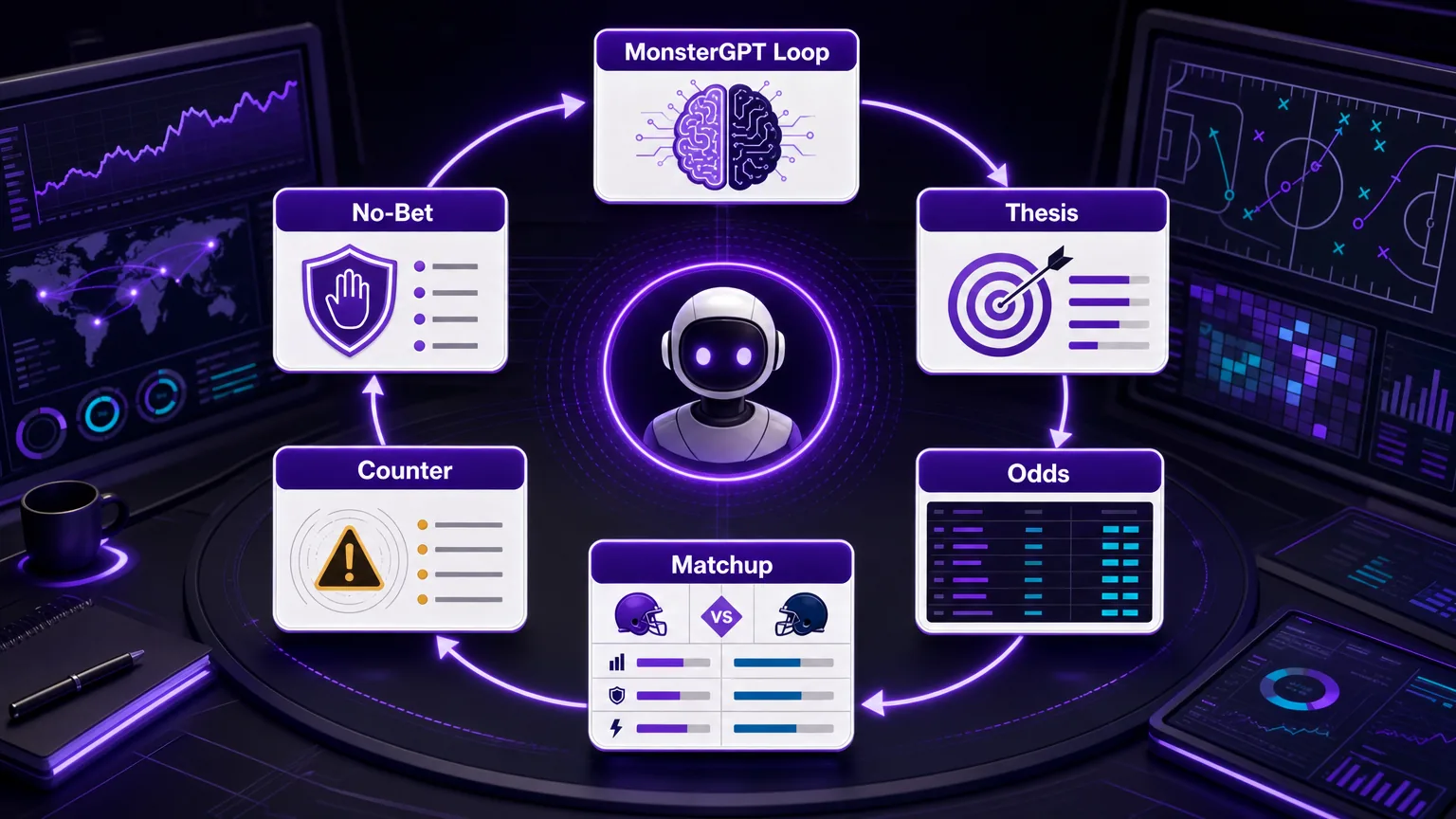
A decision memo includes evidence for, evidence against, price sensitivity, risk, pass condition, and what to log.
The number: one counterargument per prompt.
Every serious prompt should ask MonsterGPT for the strongest reason not to bet. If the assistant cannot produce a counterargument, the prompt is too weak.
Prompt Framework: Context, Data, Decision, Risk
Use this base prompt:
I am evaluating [sport/market/player/team] at [book/line/price]. Use available projection, hit rate, game log, matchup, and odds comparison context. Summarize the case for the bet, the strongest case against it, the price where it becomes a pass, and what I should log after the decision. Do not present this as guaranteed.
This prompt works because it forces the assistant into a workflow. It asks for both sides. It includes price. It asks for logging. It avoids outcome certainty.
You can adapt it for props, sides, totals, DFS, arbitrage, or sharp money.
Player Prop Prompts
Prop Comparison Prompt
Compare these three player props using projection, hit rate, recent game logs, matchup context, and current price. Rank them by research quality, not excitement. For each one, list the best argument for, the best argument against, and the line where it becomes a pass.
Role Risk Prompt
Review this player prop for role risk. Look at recent minutes, usage, injury context, matchup, and game script. Identify whether the projection depends on stable opportunity or a fragile assumption.
Overreaction Prompt
Tell me whether I am overreacting to the last game. Compare the recent result against longer role indicators, matchup context, and the current line.
Pass Condition Prompt
Before I bet this prop, define three pass conditions: price movement, lineup news, and matchup concern. Make the pass conditions specific.
Game Analysis Prompts
Game Environment Prompt
Summarize this game environment for betting research. Include pace, total, spread, injury context, matchup edges, and which markets may be most sensitive to late news.
Sides And Totals Prompt
Compare the side and total markets for this game. Explain what each bet would need to be true, what market movement says, and what number would make each a pass.
News Sensitivity Prompt
List the news items that could change this game analysis. Rank them by importance and explain which bets would be most affected.
No-Bet Prompt
Make the strongest case for not betting this game. Focus on uncertainty, price, matchup disagreement, and market movement.
The no-bet prompt is one of the most valuable prompts because it fights action bias.
Line Shopping Prompts
Price Sensitivity Prompt
This bet was researched at [line/price], but the current best available number is [line/price]. Explain whether the original case still applies and where the bet becomes a pass.
Book Comparison Prompt
Compare these available prices across books. Identify the best number, any stale outlier, and whether the difference changes expected value enough to matter.
Rule Check Prompt
Create a sportsbook rule checklist for this market. Include period, overtime, void rules, player participation requirements, push possibilities, and market naming.
Line shopping prompts connect directly to the guide: Sportsbook Line Shopping.
Positive EV Prompts
EV Signal Prompt
Review this positive EV signal. Explain why the signal may be valid, why it may be misleading, whether the current price still supports it, and what risk filter should be applied before action.
Edge Threshold Prompt
Help me define a minimum edge threshold for this market. Consider price freshness, market liquidity, line movement, news sensitivity, and stake size.
Exposure Prompt
I already have these related bets. Does this +EV candidate increase correlated exposure? Summarize the portfolio risk before I decide.
Sharp Money Prompts
Market Movement Prompt
Explain this line movement. Include opening line, current line, timing, book comparison, possible public pressure, possible sharp pressure, and reasons the move may already be priced in.
Reverse Movement Prompt
The public appears to favor one side, but the line moved the other way. Give three possible explanations and what I should verify before acting.
Tail Or Pass Prompt
I am tempted to tail this sharp-money signal. Make the strongest argument for passing if the current number is worse than the move price.
Sharp-money prompts should reduce blind tailing. Read the full guide: Sharp Money Scanner Guide.
Arbitrage And Middles Prompts
Arbitrage Checklist Prompt
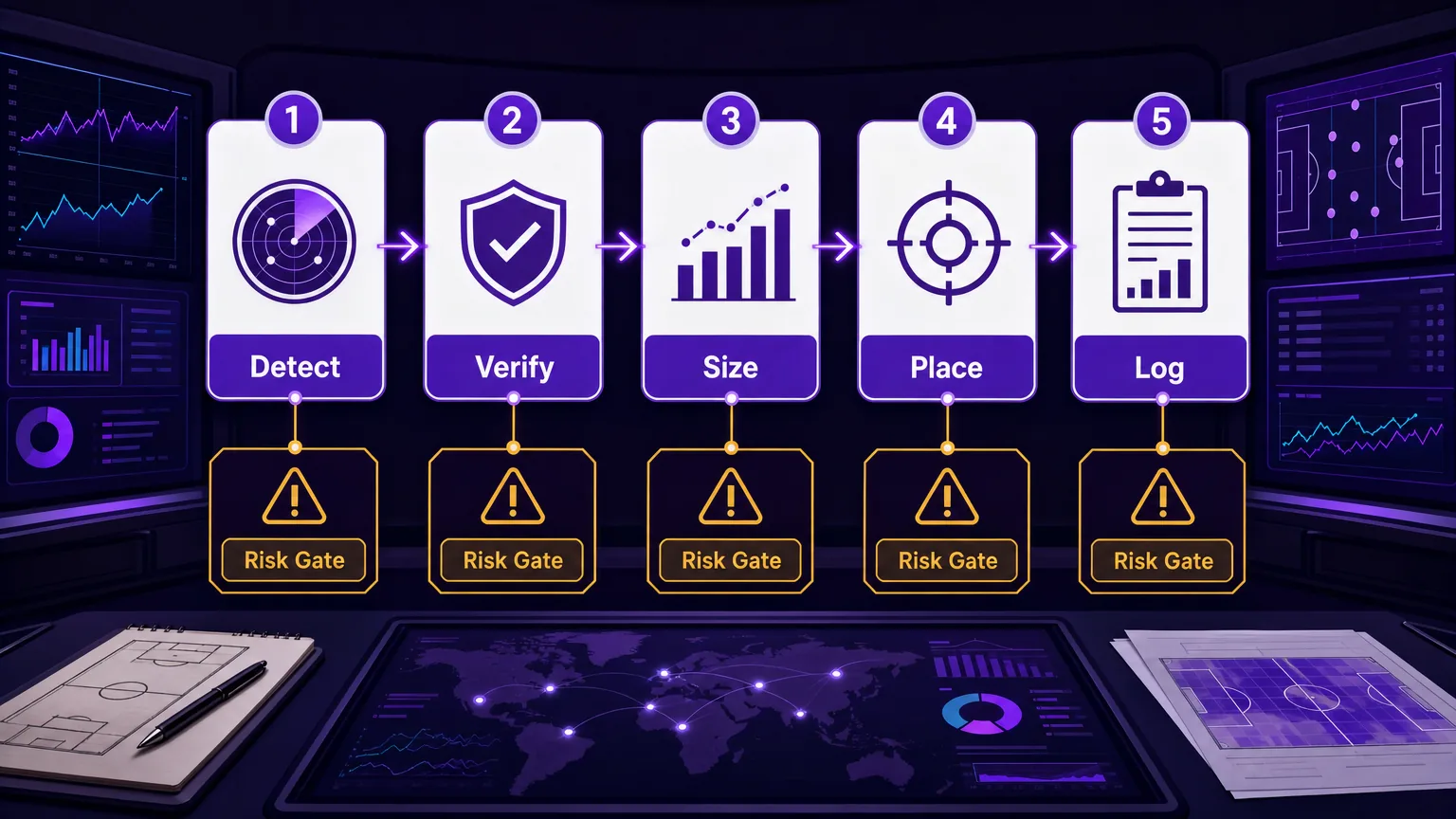
Turn this arbitrage alert into an execution checklist. Include books, exact markets, odds, required stakes, matching rules, availability, limits, and reasons to pass if either side changes.
Middle Payoff Prompt
Explain this possible middle. Identify the middle zone, push outcomes, upside, downside, required prices, and whether the position is different from a true arbitrage.
Execution Risk Prompt
List every way this arbitrage or middle can fail in practice, including stale lines, stake sizing, book limits, market mismatch, and one-side acceptance.
DFS Prompts
Player Pool Prompt
Review this DFS player pool by projection, salary, role, ownership risk, game environment, and late-news sensitivity. Separate cash-game plays from tournament plays.
Lineup Fragility Prompt
Review these generated DFS lineups. Identify fragile assumptions, overexposure, missing correlation, ownership risk, and late swap concerns.
Contest Fit Prompt
Explain whether this lineup build fits cash games, small-field tournaments, or large-field tournaments. Recommend what rules should change for each contest type.
DFS prompts are most relevant to Monster Pro because the DFS Optimizer is part of that plan.
Bad Prompts To Avoid
Avoid prompts that ask for certainty:
- "What is the lock?"
- "What will definitely hit?"
- "Give me a guaranteed winner."
- "How much should I bet to make money?"
- "Ignore the risks and pick the best one."
- "Build a parlay that cannot lose."
Replace them with prompts that ask for structure:
- "What would make this a pass?"
- "What is the strongest counterargument?"
- "What price kills the edge?"
- "Which assumption is most fragile?"
- "What should I log after the decision?"
The replacement prompts make the assistant useful without pretending risk disappears.
Internal Links
- MonsterGPT review: MonsterGPT Review
- Data lab workflow: Sports Betting Data Lab
- Monster Pro comparison: Monster Pro vs MonsterGPT
- Positive EV: Positive EV Betting
- Sharp money: Sharp Money Scanner Guide
- Arbitrage tools: Arbitrage Betting Tools
- DFS: DFS Optimizer Guide
- Pricing: Monster Bet Pricing
Final Verdict
MonsterGPT prompts are strongest when they make research harder to fake. Ask for evidence, counterarguments, price sensitivity, pass conditions, and logs. Avoid prompts that ask for certainty.
For AI-assisted sports betting research and Full Lab Access, open MonsterGPT on Whop.
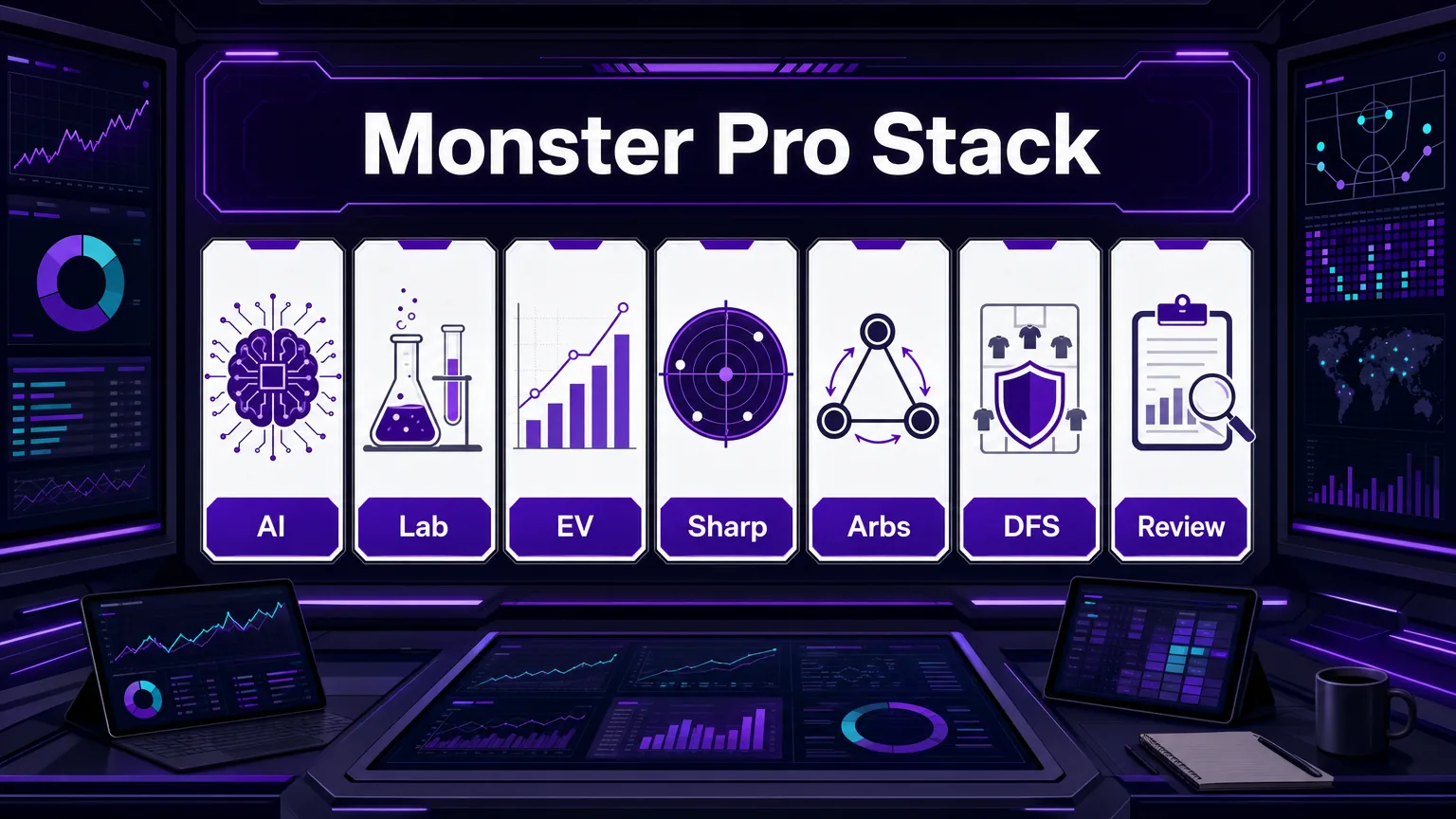
For the broader stack that adds +EV, sharp money, arbitrage, middles, and DFS tools, open Monster Pro on Whop.
Seven-Day Workflow Test
A paid betting tool should be judged before renewal, not after a lucky or unlucky result. For Best MonsterGPT Prompts for Sports Betting Research, the practical test is seven days long because the public Monster Bet offers are weekly products. The question is not whether MonsterGPT sounds useful. The question is whether it changes a decision that would otherwise be weaker, slower, or more emotional.
Start the test with a written baseline. Before opening the tool, write down how you normally handle this workflow: where the idea comes from, which data you check, how often you compare prices, what makes you pass, and how you decide stake size. This matters because a tool can feel valuable simply because it creates more activity. Activity is not the same as improvement. A cleaner process should make the bettor more selective, not just busier.
During the week, log every meaningful interaction in the AI-assisted prompt workflow lane. Record the initial idea, the tool or screen used, the price or line checked, the strongest reason to pass, the final action, and the later review note. A pass counts as a useful outcome when the tool helps reject a weak position. That is one of the easiest values to miss. Better research is not only about finding more bets; it is also about removing bad ones before they reach the slip.
At the end of the week, score the tool on behavior, not outcome. Did it force better questions? Did it expose a stale price? Did it reveal a mismatch between the headline and the actual line? Did it reduce impulsive bets? Did it create a repeatable checklist? If the answer is no, the product may still be interesting, but it has not earned automatic renewal.
Renewal Checklist
Use this checklist before renewing, upgrading, or switching plans:
| Renewal question | Keep testing | Pause or downgrade |
|---|---|---|
| Did the tool change a real decision this week? | Yes, with examples in the log. | No, it mostly created browsing time. |
| Did it help you pass on weaker bets? | Yes, the pass reasons are visible. | No, it mostly increased action. |
| Did you compare price and risk before betting? | Yes, every logged idea has a price note. | No, the tool became a confidence shortcut. |
| Did the plan match the workflow? | Yes, MonsterGPT was used for AI-assisted prompt workflow. | No, the plan's main features stayed unused. |
| Is the risk still explicit? | Yes, losses, limits, stale lines, and uncertainty are written down. | No, the tool made betting feel cleaner than it is. |
This checklist is deliberately strict. Sports betting tools should support research and workflow, but they do not guarantee wins, profit, or personal outcomes. The most useful Monster Bet plan is the one that earns a place in a disciplined routine. The least useful plan is the one that creates enough excitement to hide the absence of a routine.
Common Mistakes To Avoid
The first mistake is treating AI-assisted prompt workflow as a complete betting process. It is one lane. It still has to connect to bankroll rules, sportsbook availability, timing, line movement, and a final pass condition. If those pieces are missing, the tool can increase confidence faster than it increases discipline.
The second mistake is judging the tool from one result. A winning bet can hide bad process, and a losing bet can follow good process. The better review is a sample of decisions: bets placed, bets passed, numbers compared, prompts asked, signals ignored, and renewal notes. That review is less exciting than a single result, but it is much harder to fool.
The third mistake is ignoring the specific risk in this lane: a prompt can produce confident language without proving that a bet is worth placing. Write that risk at the top of the log. If the week proves that the risk is manageable, keep testing. If the week proves that the risk keeps showing up, do not solve it by buying a bigger plan. Solve the workflow first.
Practical Next Step
If this article describes the exact workflow you need to improve, inspect the relevant Monster Bet offer on Whop: open MonsterGPT on Whop. Use the link as the start of a test, not as a promise. Decide what the tool must prove before the next renewal date, then measure that proof in your own log.